091-774-6666
 @whospital

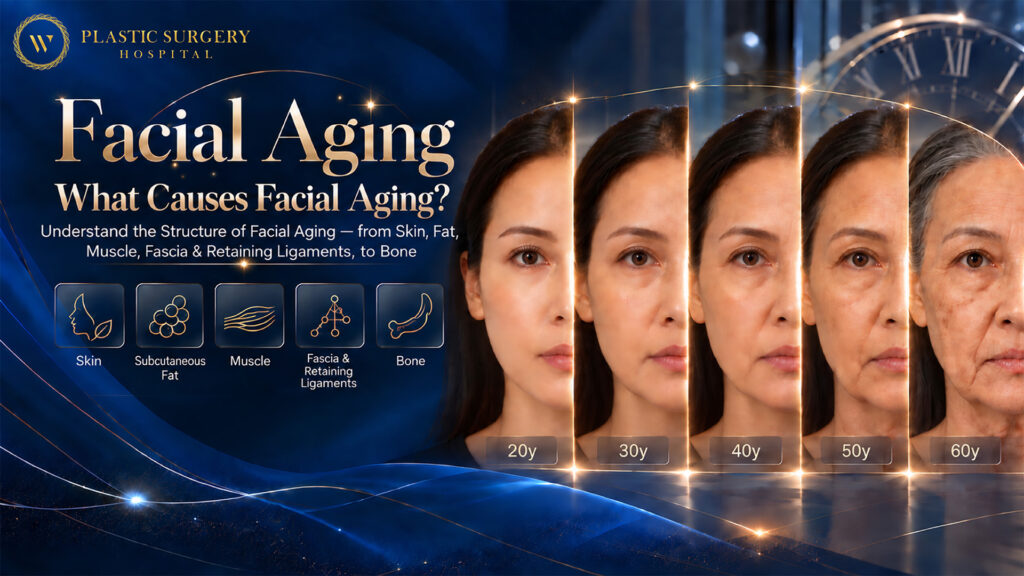
Why Does Your Face Look Older? Understanding Facial Aging, from Skin, Fat, and Muscle to Bone Structure
Many people believe that an older-looking face is caused by “sagging skin” alone, so they often turn to skincare or a facelift without understanding the real cause. In reality,Facial Aging, the process by which the face ages, happens simultaneously across multiple structural layers, from the skin all the way down to the bone. Understanding what happens in each layer helps you choose care or treatment that targets the problem more precisely.
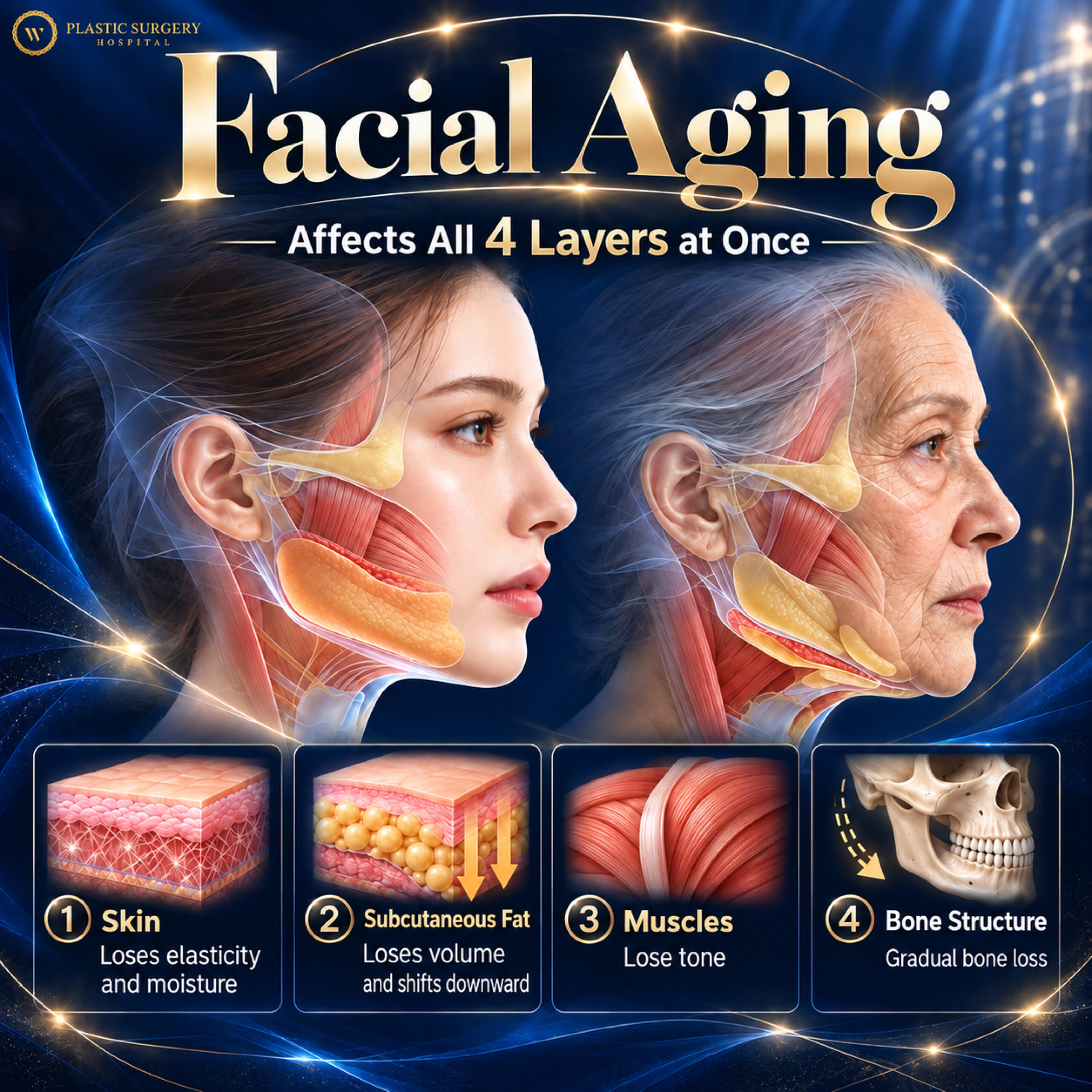
Facial Aging Happens Simultaneously in 4 Structural Layers
The face is made up of 4 main structural layers stacked on top of one another, and every layer changes with age in its own way.
1. The Skin Layer (Skin): Loss of Elasticity and Hydration
As we age, the skin’s production of collagen and elastin steadily declines, causing it to lose elasticity and hydration. Wrinkles, sagging, and uneven skin tone begin to appear. These changes in the first layer are the ones most people notice most easily.
2. The Subcutaneous Fat Layer (Subcutaneous Fat): Loss and Shifting
Subcutaneous fat doesn’t just give the face its fullness. It also acts as a kind of “cushion” that supports the facial structure and keeps it looking firm. With age, this fat layer gradually decreases in volume and shifts downward with gravity, leaving the cheeks looking hollow, the smile lines deeper, and the face looking tired and older than your age.
3. The Muscle Layer (Muscle): Loss of Firmness
The facial muscles we use for expressions, such as smiling or frowning, gradually lose their firmness and tone with age, just like the muscles in the rest of the body. When the muscles sag, the skin and fat above them sag along with them, leading to a double chin and a less defined jawline.
4. Bone Structure (Bone Structure): Gradual Bone Loss
Many people don’t realize that the facial bones also change with age. Bone mass around the jaw, cheeks, and eye sockets gradually diminishes, changing the framework that once supported the skin and fat above it. As a result, the face looks sunken, and its proportions change noticeably from those of your younger years.
Why It's Important to Understand All 4 Layers of Facial Aging
Many people choose anti-aging solutions based only on what they can see on the surface of the skin, such as using moisturizers or getting fillers alone. But if the real cause lies in the muscle layer or the bone structure, a surface-level fix may not address the problem at its source, and it may produce unnatural-looking results because it tries to make up for what’s been lost in the deeper layers by adding volume only to the shallow layers.
Understanding which layer is mainly responsible for your own aging is therefore an important first step before deciding how to care for or correct it.
How W Plastic Surgery Hospital Analyzes Facial Aging
Because everyone ages for different reasons, our team of specialist doctors focuses on assessing which layer is mainly responsible for the changes in each individual case before planning the right approach. Whether it’s skincare, fat grafting or fillers to restore fullness, or a facelift to correct the muscle layer directly, the goal is results that are targeted and look as natural as possible.
Talk to our team about your facial aging concerns.
FAQ: Frequently Asked Questions About Facial Aging
Q1: At what age does facial aging start?
Changes in the skin and subcutaneous fat may start to become noticeable from around age 25–30 onward, while changes in the muscles and bone structure usually become more obvious from around age 35–40 onward. However, this depends on each person’s genetics and how well they take care of themselves.
Q2: How can I tell which layer is mainly responsible for the changes in my face?
We recommend consulting a doctor for a thorough facial assessment. Your doctor will look at visible signs, such as deep smile lines, a less defined jawline, or a sunken appearance, to determine which layer is the main cause and plan a targeted treatment.
Q3: Is skincare alone enough to slow down facial aging?
Skincare can help slow down changes in the skin layer. But if your aging is also caused by changes in the fat, muscle, or bone layers, skincare alone may not be enough to fully address the problem at its source.
Q4: Why do some people’s faces age faster than others of the same age?
Many factors affect how quickly facial aging happens, such as genetics, sun exposure, smoking, sleep habits, and everyday self-care. Each of these affects the different structural layers at different rates.
Q5: Does correcting facial aging require treating every layer at the same time?
Not necessarily. It depends on which layer’s changes are mainly responsible for each person’s concerns.
Your doctor will assess you and recommend the most suitable approach, which may involve correcting just one layer or several layers together, depending on the characteristics and severity of each case.