091-774-6666
 @whospital

Volume Loss vs. Skin Laxity: What's the Difference? Identify the Cause Before Treating a Tired-Looking Face
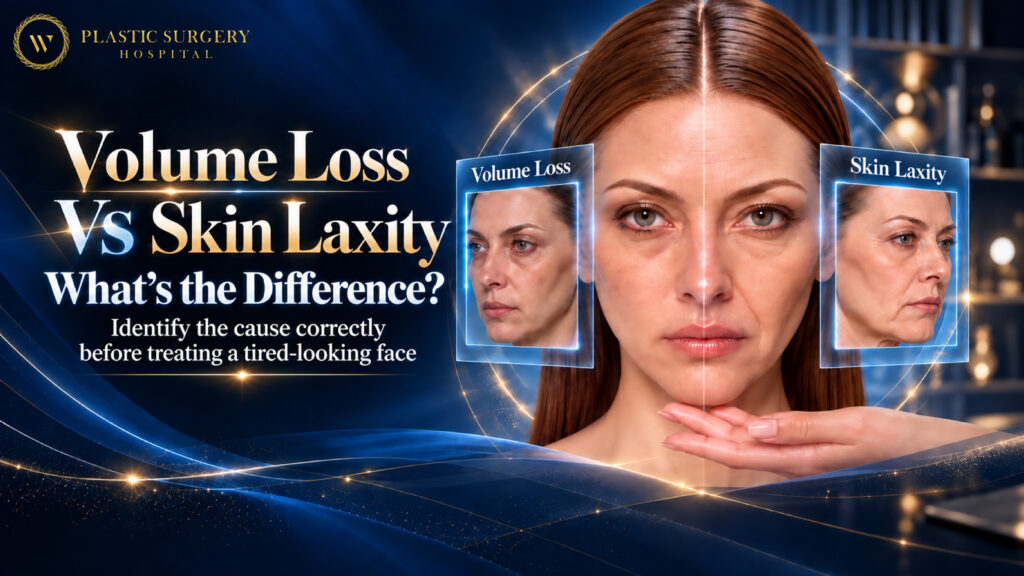
“My face looks tired” is something many people feel as they get older, but the real cause may not be the same for everyone. For some, it’sVolume Loss, the loss of facial volume, while for others it’sSkin Laxity, or loose, sagging skin. Although both can make the face look tired, their causes and treatments are completely different. Identifying the right cause before deciding on treatment is the most important first step.
What Is Volume Loss?
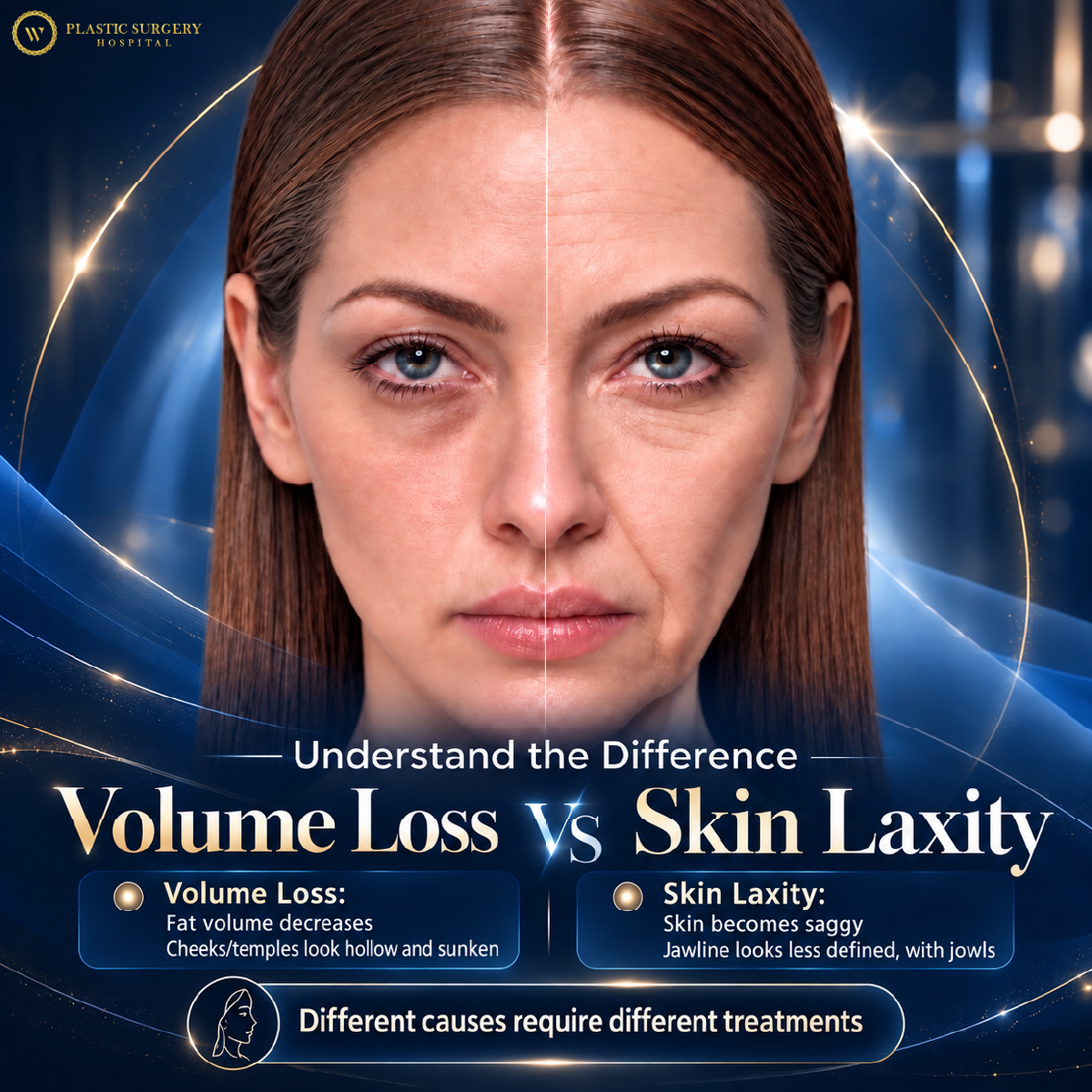
Volume Loss is a condition in which the face loses some of its original volume. It may be related to the reduction or shifting of fat and soft tissue with age, causing once-full areas like the cheeks, temples, or under-eyes to look hollow and sunken.
Signs of Volume Loss
- Cheeks look hollow and not as full as before
- Temples look sunken and concave
- Smile lines start to deepen as fat shifts downward
- Under-eyes look darker and more hollow than usual
What Is Skin Laxity?
Skin Laxity is a condition in which the skin loses its elasticity and firmness, becoming loose and no longer fitting snugly over the facial structure as it once did. It’s mostly caused by the age-related decline of collagen and elastin in the skin, along with the muscle and fascia layer beneath the skin (SMAS) beginning to sag.
Signs of Skin Laxity
- A less defined jawline and the beginnings of a double chin
- Skin around the cheeks and chin starts to droop
- Skin looks loose and lacks firmness, even without obvious wrinkles
- The skin no longer stays as firm as it once did when you smile or move your face
Why You Need to Tell Them Apart Before Choosing a Treatment
A common problem is that many people choose a treatment without understanding the real cause, so the results miss the mark or aren’t worth the cost. Knowing what your main concern actually is becomes the key to making the right decision:
- If your main concern is “hollow or sunken areas” (Volume Loss) but you choose a facelift
- A facelift is great for tightening sagging skin, but itcan’t add volume to sunken areas.
- As a result, your face may still look hollow or tired.
- If your main concern is “sagging” (Skin Laxity) but you choose filler
- Filler can restore fullness, but itcan’t lift sagging skin or muscle.
- Trying to fix sagging by injecting large amounts of filler can make the face look unnaturally puffy instead.
Understanding your real concern first helps you choose the most appropriate and cost-effective treatment.
In Reality, Many People Have Both Concerns at the Same Time
Another thing to understand is that Volume Loss and Skin Laxity often occur together, especially in older patients, who often experience both fat loss and loose skin at the same time. In these cases, treatment may require a combination of more than one procedure to achieve the most complete and natural-looking results.
W Plastic Surgery Hospital Gets the Assessment Right Before Recommending a Solution
At W Plastic Surgery Hospital, we place great importance on thoroughly analyzing each patient’s face before recommending any procedure. Our team of specialist doctors will assess whether your tired appearance is caused by Volume Loss, Skin Laxity, or both.
They will then plan a targeted approach, whether that’s restoring volume, a facelift for tightening, or a combination of the two, so you get the most worthwhile and natural-looking results.
Talk to our team about volume loss and sagging.
FAQ: Frequently Asked Questions About Volume Loss and Skin Laxity
Q1: How can I tell whether I have Volume Loss or Skin Laxity?
You can tell by what you see. Hollow cheeks or sunken temples usually point to Volume Loss, while a poorly defined jawline or a double chin usually points to Skin Laxity. That said, we recommend consulting a doctor for a thorough assessment, since many people have both concerns at once.
Q2: Which is harder to correct: Volume Loss or Skin Laxity?
Both can be corrected with the right approach; they just require different procedures. Volume Loss is usually corrected by restoring volume, while Skin Laxity usually requires lifting and tightening. How difficult it is depends more on the severity of each case than on the type of concern.
Q3: If I have both Volume Loss and Skin Laxity, do I need several procedures at once?
You don’t have to do everything at the same time. Your doctor will assess which concern contributes most to your tired appearance and recommend treating them in order of priority. You can also choose to do one procedure at a time, whenever you’re ready.
Q4: At what age does Skin Laxity usually become noticeable?
In general, Skin Laxity usually becomes more noticeable from age 40 onward, since this is when collagen and elastin in the skin decline significantly and the facial muscles start to sag with age. However, this depends on each person’s individual factors.
Q5: What kind of doctor should I consult to get an accurate diagnosis?
You should consult a specialist aesthetic surgeon with expertise in thoroughly assessing facial structure to determine whether your concern stems from Volume Loss, Skin Laxity, or both, before planning the most suitable procedure.