091-774-6666
 @whospital

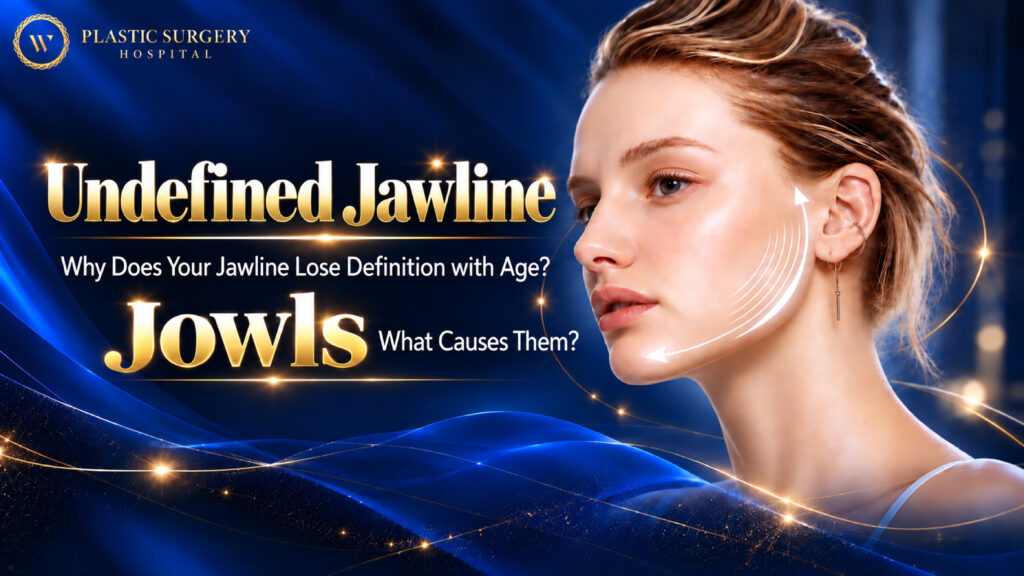
Why Does Your Jawline Lose Definition with Age? What Causes Jowls?
When you look in the mirror as you get older, you may start to notice a problem that’s bothersome and chips away at your confidence: “the once-sharp jawline is starting to disappear.” Excess tissue begins to droop around the corners of the mouth and the jaw, until the jawline seems to blend right into the neck. In medical terms, this is known asJowls (sagging cheeks along the jaw), one of the most visible signs that the face’s structure is aging.
This article walks you through the real reasons why your jawline loses definition with age, the mechanisms that cause jowls, and how to correct this sagging with targeted, safe results under the hospital standards ofW Plastic Surgery Hospital.
Where Did Your Sharp Jawline Go? When Facial Structure Changes with Age
When we’re young, the jawline (Jawline) is usually sharp and defined, running in a clean line from the angle of the jaw down to the tip of the chin. But over time, the aging process (Facial Aging) changes the entire internal structure, causing sagging that robs the jawline of its definition. The main factors are:
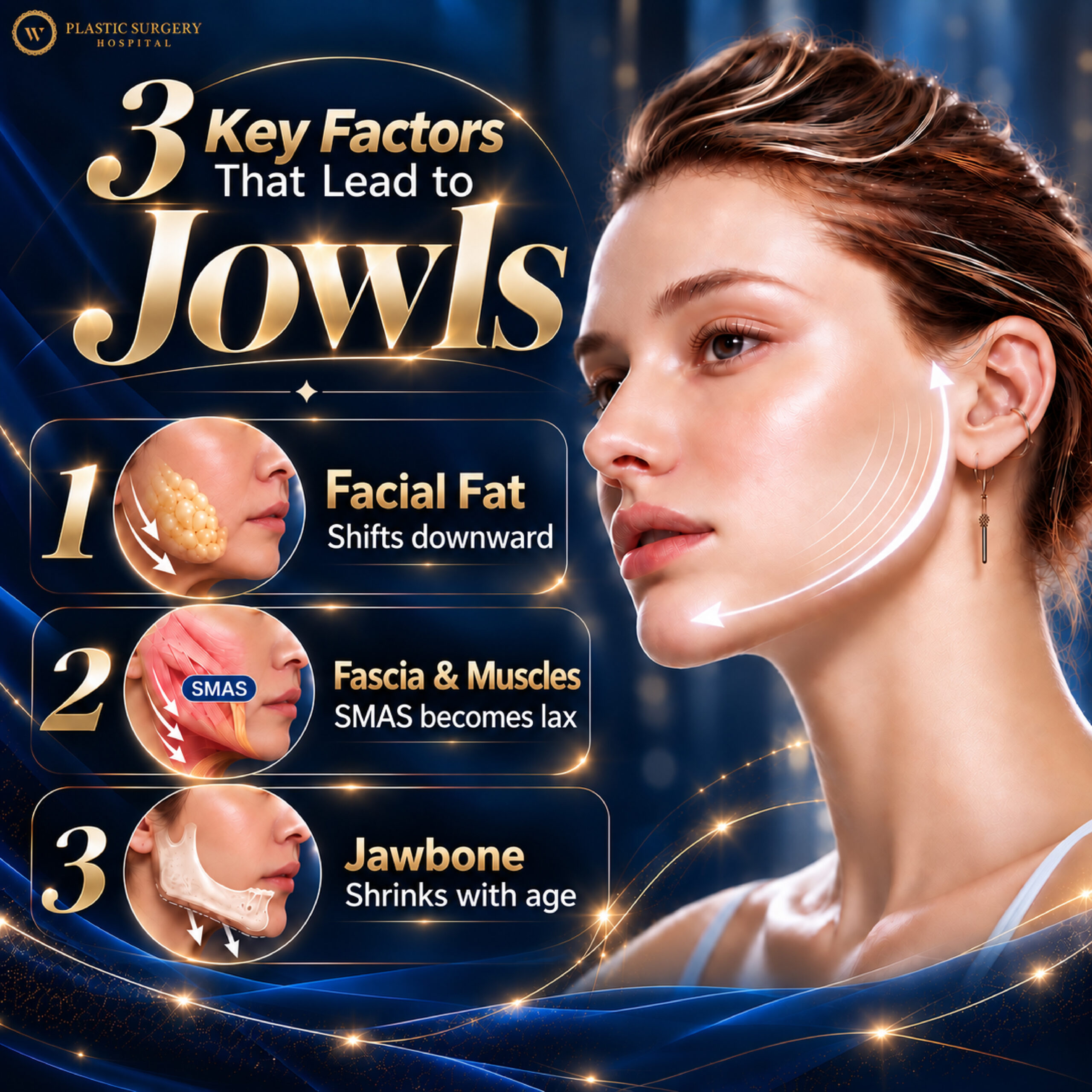
- Shrinking and receding of the jawbone (Mandible Bone Resorption): Our facial bones don’t keep the same shape for life. With age, bone mass in the jaw and chin gradually breaks down and recedes, so the base that once held the skin taut and firm loosens and shrinks along with it.
- Loss of skin elasticity and collagen: Collagen and elastin, the proteins that act like springs supporting the skin, begin to break down, causing the skin to lose its firmness and start to sag.
- Gravity: A key culprit that pulls tissue, fat, and weakening muscles downward, where they slide and collect along the line of gravity.
What Are Jowls, and How Do They Form?
Jowls are pockets of sagging tissue, fat, and skin that collect on both sides of the jaw and around the corners of the mouth (just above the jawline), making the face look pouchy and heavy and making the lower face look noticeably wider.
The main causes of jowls are:
- Descent of the facial fat pads (Fat Pad Descent): There are fat pads in the cheeks and the middle of the face. With age, the facial retaining ligaments (Retaining Ligaments) begin to loosen and relax, allowing these fat pads to slide down and collect along the jawline, forming sagging pockets of cheek, or jowls.
- Sagging of the SMAS fascia and muscle: The layer of muscle and fascia beneath the skin (Superficial Musculoaponeurotic System) loses its tension and can no longer support the weight of the tissue above it.
- Repeated use of the muscles around the mouth (Facial Muscle Pull): Some of the muscles we use for facial expressions pull downward (Downward Pulling Muscles). Over years of use, these muscles, together with loose skin, speed up the formation of folds and sagging tissue around the angle of the jaw, making these changes more pronounced.
How Jowls Make Your Face Look Older Than Your Age
Jowls and a poorly defined jawline directly affect the aesthetic proportions of the face:
- Loss of definition at the jaw angle and chin: The line separating the face from the neck disappears, making it look like you have a double chin.
- The lower face looks wider and puffier: Even if you’re not overweight, the lower face looks thick and heavy because of the sagging cheek tissue.
- Makes you look older than your age: Sagging in this area makes the face look tired, droopy, and dull.
How to Correct Jowls and Restore a Sharp Jawline
To get lasting results when correcting jowls and a poorly defined jawline, you need to choose a method that matches how severe the problem is.
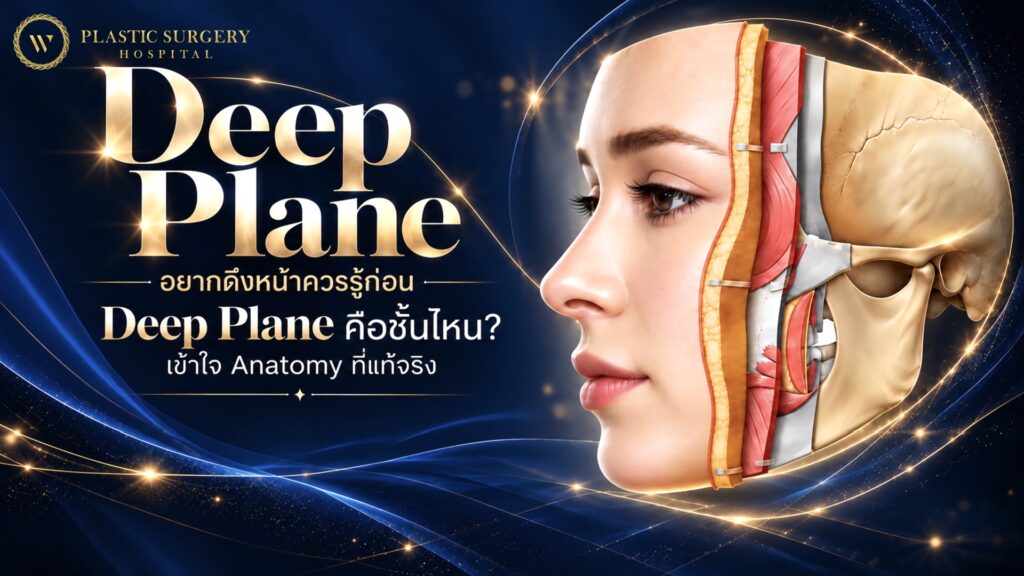
H3: Deep Structural Lifting and Correction (Deep Plane / SMAS Facelift)
For people with moderate to significant jowls and sagging, facelift surgery that focuses on lifting the SMAS fascia and the deep layer (Deep Plane) is the most effective option. It reverses the direction of the sagging and returns the tissue to its original position without pulling on the outer layer of skin, so the jawline becomes sharp, smooth, and natural-looking again.
H3: Removing Excess Fat Along with Lifting
In some cases where there is also a thick buildup of fat under the chin and along the jawline, your doctor may consider targeted liposuction to reduce excess fat before lifting and contouring the skin.
Confidence in Safety and Results at W Plastic Surgery Hospital
Correcting sagging and jowls around the jawline is a procedure that requires the precision and expertise of a specialist plastic surgeon, so the jawline becomes sharp again without unsightly scars. At W Plastic Surgery Hospital, we’re ready to care for you with the highest standards:
- Personalized assessment and treatment planning: Our surgeons thoroughly analyze the structure behind your concern to choose the facelift or lifting technique that’s best for you.
- International hospital-level safety standards: Prepared for any emergency with a full range of life-support equipment (such as an AED, vital-sign monitoring systems, and Dantrolene), with an anesthesiologist closely monitoring you 100% of the time throughout surgery.
- Natural-looking, firm results: We focus on restoring a youthful, defined jawline and a softer-looking face while fully preserving your unique features.
Talk to our team about jowls and jawline definition.
FAQ: Frequently Asked Questions About Undefined Jawlines and Jowls
Q1: At what age do jowls start to form, and can they be prevented?
Jowls usually become clearly noticeable from around age 40 onward, as collagen and bone structure begin to break down. Basic prevention includes taking care of your skin, avoiding the sun, wearing sunscreen regularly, and keeping your weight from going up and down too quickly. But once jowls have formed, medical procedures are usually needed to correct them effectively.
Q2: Why can’t regular moisturizers or facial massage fix jowls?
Because jowls are caused by sagging in the deep structural layers, including bone loss, shifting fat pads, and loosening of the SMAS muscle layer, all of which lie beneath the skin. Moisturizers can only nourish the outermost layer of skin, and while facial massage may help with circulation, it can’t lift sagging structures back to their original position.
Q3: How long does a facelift keep jowls corrected?
Facelift surgery, especially deep lifting techniques (Deep Plane or SMAS Facelift), is the most targeted and effective way to correct jowls. The results restore a sharp jawline and keep you looking younger for many years, naturally rejuvenating and tightening the skin of the face and neck.
Q4: Will facelift surgery for jowls (Jowls) leave noticeable scars? How are they hidden?
The specialist surgeons at W Plastic Surgery Hospital take great care to carefully hide surgical incisions along the hairline, in front of the ear, and in the natural crease behind the ear. Once the incisions have healed, you can wear your hair up or put on makeup with confidence, without anyone noticing any surgical scars.
Q5: How long is the recovery after jawline-lifting surgery?
During the first 1–2 weeks after surgery, you may have some swelling and bruising as part of your body’s natural healing process. Wearing a compression garment and following your doctor’s instructions can help reduce the swelling. The hospital also offers aPost-Op Follow-up program, in which our team of doctors and nurses closely monitors your progress and cares for you, so you can feel confident at every stage of your recovery.