091-774-6666
 @whospital

Can You Get a Facelift and Fat Grafting at the Same Time? The Structural Rejuvenation Approach
As we age, the signs of aging on the face rarely come alone. They usually come as a “package deal”: sagging skin, a less defined jawline, and once-full cheeks that have become hollow and sunken. That leaves many people wondering,“If I have surgery, can I get a facelift and fat grafting at the same time?”
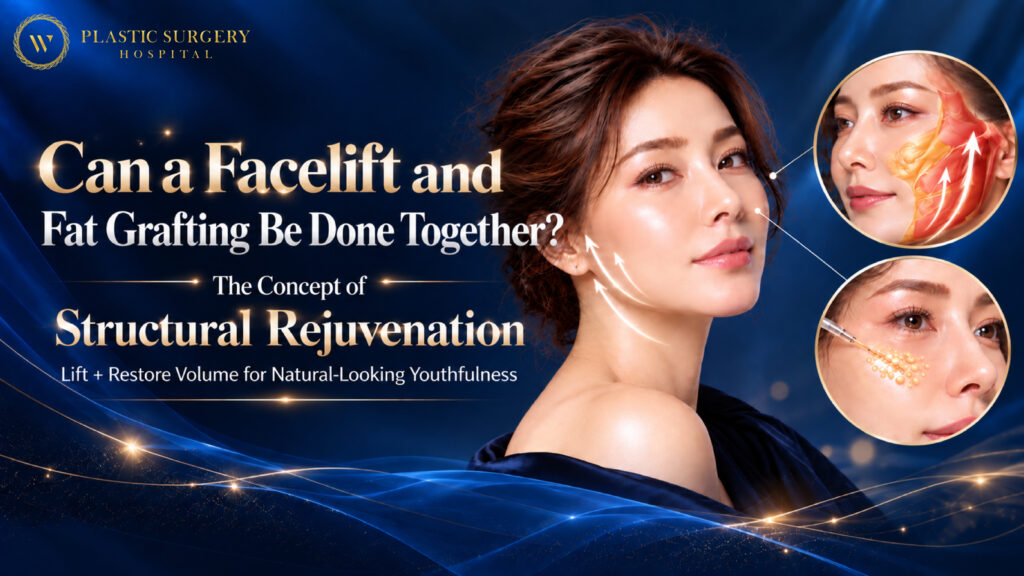
The answer is “Yes, they can be done together, and it’s a popular approach that plastic surgeons recommend.” This approach is based on an advanced concept called Structural Rejuvenation (holistic restoration of the facial structure), which seamlessly combines the strengths of lifting and volume restoration. This article explains why these two procedures should be done together and how they deliver superior results atW Plastic Surgery Hospital.
Why Isn’t a “Facelift” or “Fat Grafting” Alone Enough to Correct Signs of Aging?
During the aging process of the face (Facial Aging), the internal structure changes in several ways at the same time.
H3: Sagging (Skin & Muscle Laxity)
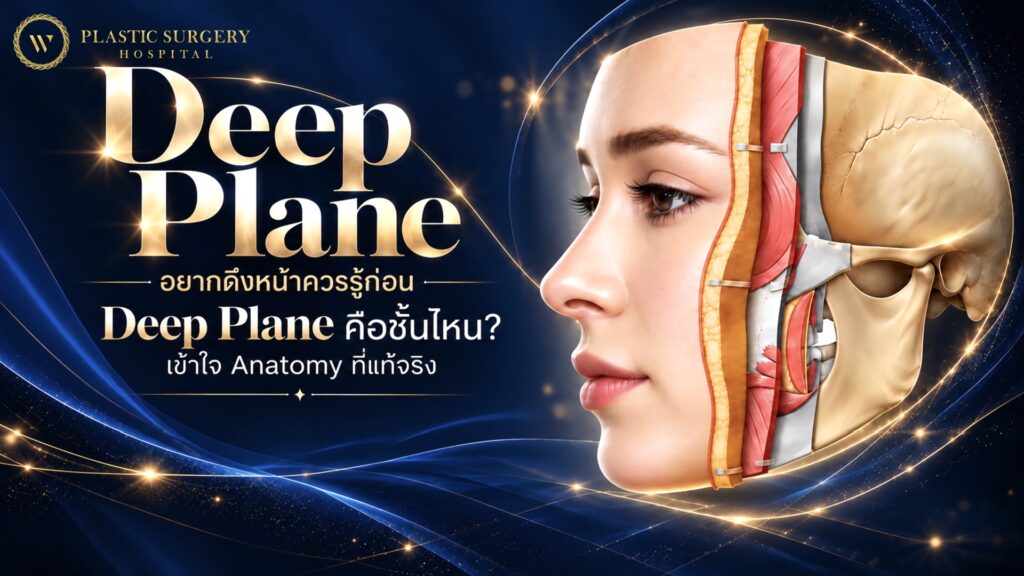
The muscle and fascia layer beneath the skin (SMAS), along with the facial retaining ligaments, loosens, leading to sagging cheeks and a less defined jawline. This needs to be corrected with aFacelift.
H3: Hollowing and Volume Loss (Volume Loss)
The deep layer of fat beneath the skin shrinks and bone mass breaks down, making the temples, under-eyes, and apples of the cheeks look hollow and gaunt. A facelift alone can’t add volume to these sunken areas to restore their fullness.
If you choose only one of these, for example, a facelift without fat grafting, your face may become tighter but still look hollow and tired. Or if you choose only fat injections without correcting the sagging, your face may look larger and puffy while the sagging remains.
What Is Structural Rejuvenation? The Solution for Complete Facial Rejuvenation
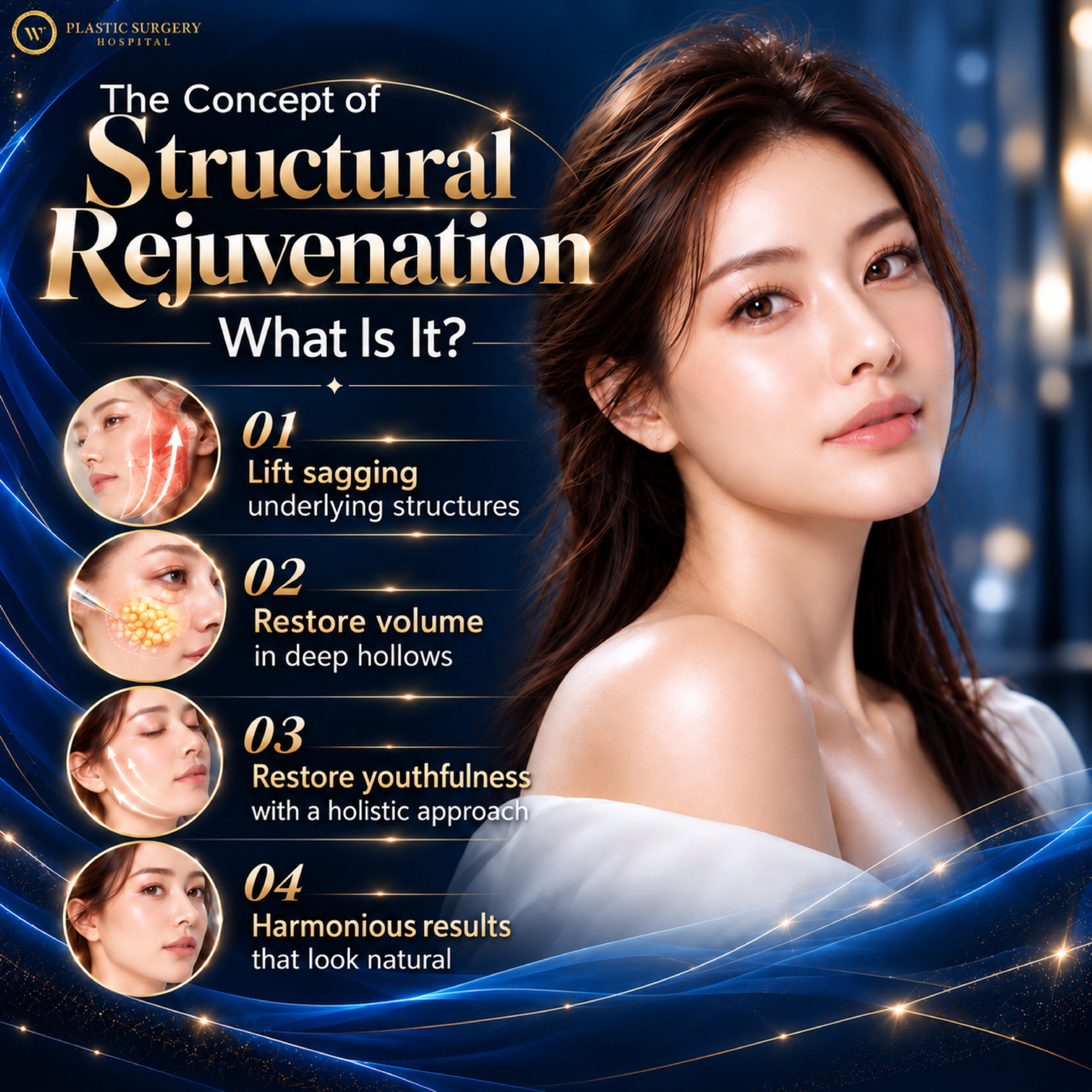
Structural Rejuvenation is a holistic approach to restoring the facial structure that combines:
- Deep structural lifting (Deep Plane / SMAS Facelift): Corrects sagging by returning sagging tissue to its original position and restoring a sharp jawline.
- Volume restoration with your own fat (Autologous Fat Grafting): Excess fat is taken from your body, purified, and injected into areas that have become sunken and flat, such as the temples, hollow under-eyes, and upper cheeks, to restore a fresh, youthful fullness.
Combining the two procedures is like renovating an entire house: strengthening its supporting structure (the facelift) and improving its interior (fat grafting) at the same time.
The Benefits of Getting a "Facelift + Fat Grafting" at the Same Time
Combining these two surgical techniques offers superior benefits for long-term results:
- Complete results, with both firmness and fullness: Your face doesn’t just look tighter. It also looks radiant, dimensional, and healthy, like it did in your younger years.
- Saves time, with just one surgery: There’s no need for multiple surgeries or multiple rounds of anesthesia, so your recovery all happens in one go.
- Better fat survival and integration: Injecting fat while the tissue structure is being repositioned during the facelift helps blood supply reach the fat cells, making the fat graft take more effectively.
International Safety and Standards at W Plastic Surgery Hospital
Combination surgery (Combination Surgery), such as a facelift with fat grafting, requires a high level of expertise from a specialist plastic surgeon in order to manage the length of surgery and keep the patient safe. AtW Plastic Surgery Hospital, we give this the highest priority at every step:
- Detailed assessment of your facial proportions: A specialist doctor analyzes the structure behind each patient’s concerns to calculate how much fat to add and which direction to lift, so the two work together in perfect balance.
- Hospital-level safety standards: Care is provided in sterile operating rooms with a full range of life-support equipment (such as vital-sign monitors and Dantrolene for emergencies), and a specialist anesthesiologist manages your anesthesia one-on-one throughout surgery.
- Continuous post-operative care: Feel confident with ourPost-Op Follow-up program, in which our team of doctors and nurses closely monitors how your incisions are healing and how your swelling is progressing.
Ask our team about combining a facelift with fat grafting.
FAQ: Frequently Asked Questions About Getting a Facelift and Fat Grafting Together
Q1: Will getting a facelift and fat grafting together make recovery take longer?
Overall recovery time is similar to that of a facelift alone, but you may have a little extra swelling where the fat was injected during the first 1–2 weeks. Your body will gradually recover and the swelling will go down on a normal timeline, and our medical team will closely look after you and guide you on how to care for yourself.
Q2: Will the injected fat last permanently, or will it all dissolve?
The fat cells used for injection are your own fat (Autologous Fat). After being purified and injected into the tissue, the fat that takes and establishes a blood supply can last permanently, becoming part of your own tissue. Your doctor will account for the natural rate of fat reabsorption in advance, so you end up with just the right amount of fullness.
Q3: If I’ve had filler before, can I still get a facelift and fat grafting at the same time?
Yes, but your surgeon will need to carefully assess your skin and any existing filler during your consultation. If there’s a large amount of residual filler, your doctor may consider an appropriate way to address it before surgery, so the results of your facelift and new fat grafting are as smooth as possible.
Q4: Will adding fat grafting to a facelift make my face look fat or too puffy?
No, not when it’s done under the care of an experienced doctor. The Structural Rejuvenation approach focuses on adding the right amount of fat to restore fullness in sunken areas (such as the temples, under-eyes, and hollow cheeks), while also lifting and contouring the jawline. The results look soft and well-proportioned, not overdone.
Q5: How risky is the anesthesia for major surgery like this?
At W Plastic Surgery Hospital, safety is our top priority. Anesthesia in every case is closely controlled and monitored 100% of the time by a specialist anesthesiologist, with ICU-standard vital-sign monitors and life-support equipment ready at all times, so you can feel confident about your safety throughout surgery.