091-774-6666
  @whospital
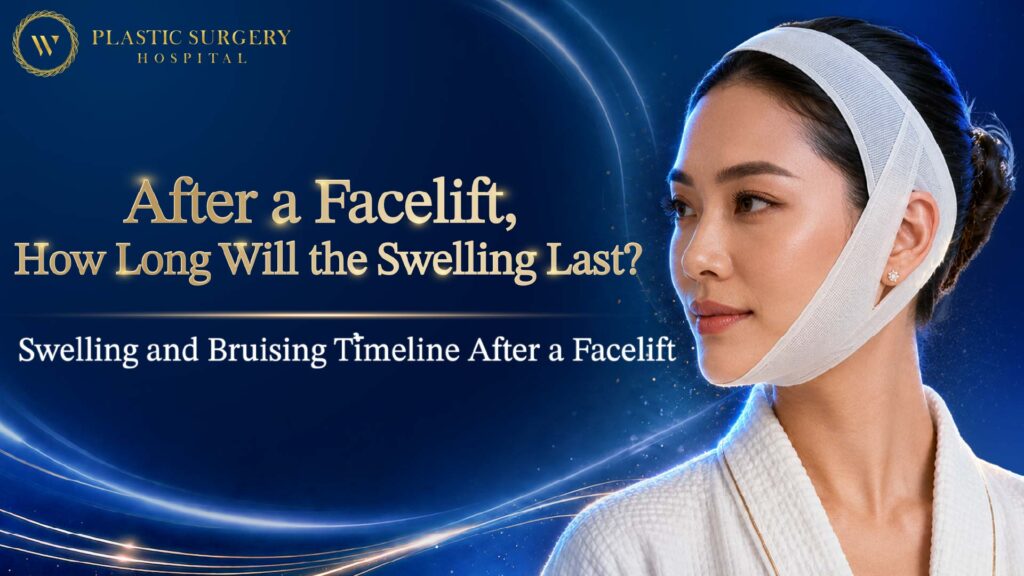
How Long Does Swelling Last After a Facelift? Duration of Swelling and Bruising After a Facelift
Two of the questions patients ask most often before deciding to have a facelift are “How long will the swelling last?” and “When can I return to normal life?” The truth is that swelling and bruising after a facelift are normal and can happen to anyone, but they gradually improve in stages. This article will go through the swelling and bruising timeline in detail so that you can confidently plan your life after surgery.
Swelling and Bruising Timeline After a Facelift, From the First Day Until Fully Resolved
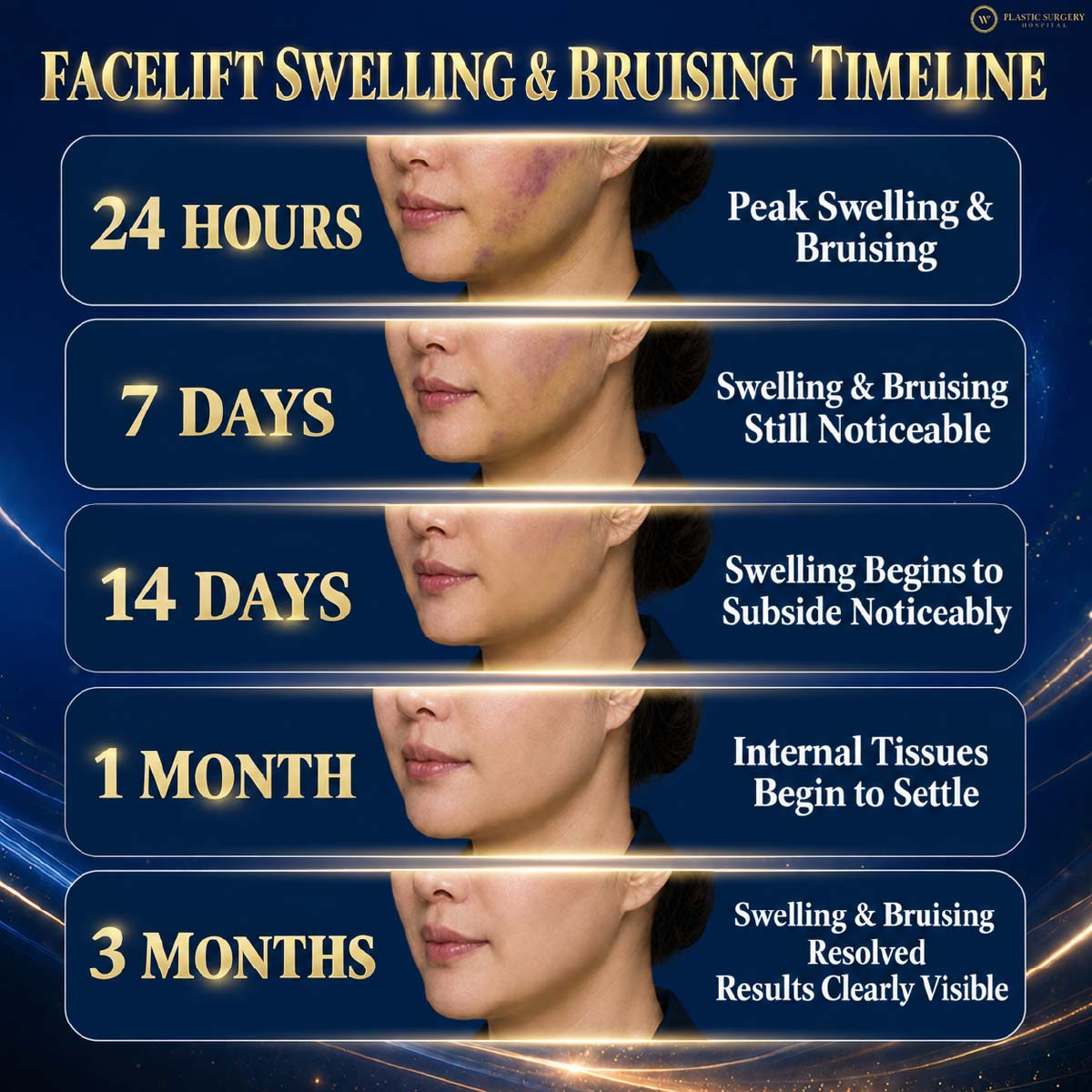
First 24 Hours: The Period With the Most Swelling and Bruising
During the first 24 hours after surgery, swelling and bruising will begin to become clearly visible on the face because the body responds to surgery through its natural inflammatory process. During this period, patients should rest fully and strictly follow the doctor’s instructions, such as sleeping with the head elevated to reduce swelling.
First 7 Days: The Period When Swelling and Bruising Are Most Noticeable
During the first week after surgery, swelling and bruising will remain clearly visible, and purple or green bruising may appear around the surgical area. This is the period when the body is fully recovering from surgery. Most patients choose to stay at home during this period while waiting for the clearly visible swelling and bruising to gradually decrease.
14 Days: Swelling Begins to Decrease Noticeably
When entering the second week, swelling and bruising begin to decrease noticeably compared with the first week. Most bruising usually fades enough to be covered with makeup. Many patients begin returning to light activities or work during this period, although the face may still look slightly tight or swollen.
1 Month: Internal Tissues Begin to Relax
After 1 month, swelling visible to the naked eye has decreased greatly, but the deeper tissues that were lifted are still in the process of adjusting and relaxing. Some areas may therefore still feel tight or firm. This is considered a normal part of the internal recovery process.
3 Months: Swelling and Bruising Have Fully Subsided and the Result Is Clearly Visible
At 3 months, swelling and bruising will have completely subsided, the internal tissues will have adjusted into place, and the face will begin to look natural according to the planned result. This period is therefore considered the point at which the final facelift result can be assessed most clearly.
Why Facelifts at W Plastic Surgery Hospital Produce Firmer and More Natural-Looking Results
The facelift technique at W Plastic Surgery Hospital focuses on lifting deeply to the SMAS (Superficial Musculoaponeurotic System), the muscle and fascia layer beneath the skin, rather than lifting only the superficial skin layer. This is because we believe true firmness must come from directly correcting the root cause of sagging, not simply pulling the skin tight to temporarily hide the problem.
Working deeply at this structural layer means that during the early recovery period the body needs somewhat more time to adjust and repair the tissues than with a shallow facelift. This is a natural part of treatment that reaches the actual structural layer. However, the resulting outcome is worth the wait because:
- The firmness truly comes from the internal structure, not only from pulling the skin tight, so the tightening is deeper and lasts longer.
- The result looks more natural because there is no need to pull the skin excessively tight to compensate for sagging internal layers. The face can therefore continue to move, smile, and make expressions naturally.
- The result lasts longer because the root cause of sagging is corrected directly rather than relying only on superficial tightening, which often relaxes more quickly.
Our medical team will explain the details of the technique and the appropriate recovery period from the consultation stage, so that patients can confidently plan their recovery and understand the long-term result they can expect.
Why the Duration of Swelling and Bruising Differs From Person to Person
Although there is a general timeline that can be used as a reference, the actual duration of swelling and bruising can differ between individuals depending on factors such as:
Surgical technique. A technique that lifts deeply to the SMAS, such as the one used at W Plastic Surgery Hospital, may require longer recovery of the deeper tissues than a technique that only lifts the skin slightly, but it provides a firmer and more natural-looking result over the long term.
Each person’s physical condition and recovery. Some people may recover faster than the general average.
Post-operative self-care. Strictly following the doctor’s instructions can help swelling and bruising subside more quickly.
How to Care for Yourself to Reduce Swelling and Bruising After a Facelift
Sleep with the head elevated during the first week after surgery to help reduce the pooling of blood and fluid in the facial area.
Avoid strenuous activities during the first 2–4 weeks to reduce the risk of making swelling and bruising worse.
Attend follow-up appointments with the doctor so the doctor can assess progress and give advice suitable for your physical condition at each stage.
W Plastic Surgery Hospital Cares for You Throughout the Recovery Period
At W Plastic Surgery Hospital, we understand that recovery after a facelift can cause considerable concern for patients. We therefore have a Post-Op Follow-up system that closely monitors symptoms at every stage, from the first day after surgery through month 3, with nurses and doctors available to provide advice throughout the recovery period. This allows you to feel reassured that you will be closely cared for until the result is complete.
For more information
FAQ: Frequently Asked Questions About Swelling and Bruising After a Facelift
Q1: After a facelift, how many days is the swelling at its worst?
The most noticeable swelling and bruising is usually during the first 7 days. After that, it gradually decreases during the first 3 months.
Q2: How many days after a facelift can I return to work?
Most patients begin returning to light activities or work at around 14 days, when the swelling and bruising have started to decrease enough to be covered with makeup. However, the exact timing depends on the nature of the work and each person’s recovery.
Q3: Why do I still feel some tightness after 1 month?
This is normal. Although visible swelling has already decreased greatly, the deeper tissues that were lifted are still in the process of adjusting and relaxing. This will gradually improve through the 3-month point.
Q4: Is there a way to help swelling and bruising go down faster?
Sleeping with the head elevated, avoiding strenuous activities during the early period, and strictly following the doctor’s instructions can all help swelling and bruising decrease more quickly.
Q5: How often should I return to see the doctor for follow-up?
You should attend follow-up appointments according to the schedule set by the doctor. In general, there will be several appointments during the first 3 months so that the progress of the wound and the swelling and bruising can be closely assessed.
Q6: Why is swelling and bruising after a facelift at W Plastic Surgery Hospital greater than elsewhere?
Because our technique lifts deeply to the SMAS layer, which is the muscle and fascia beneath the skin, instead of only lifting the superficial skin. Dissection of the deeper tissues therefore causes somewhat more swelling and bruising and for slightly longer, but in exchange the result is genuinely firm from within, looks more natural, and lasts longer over the long term.