091-774-6666
 @whospital

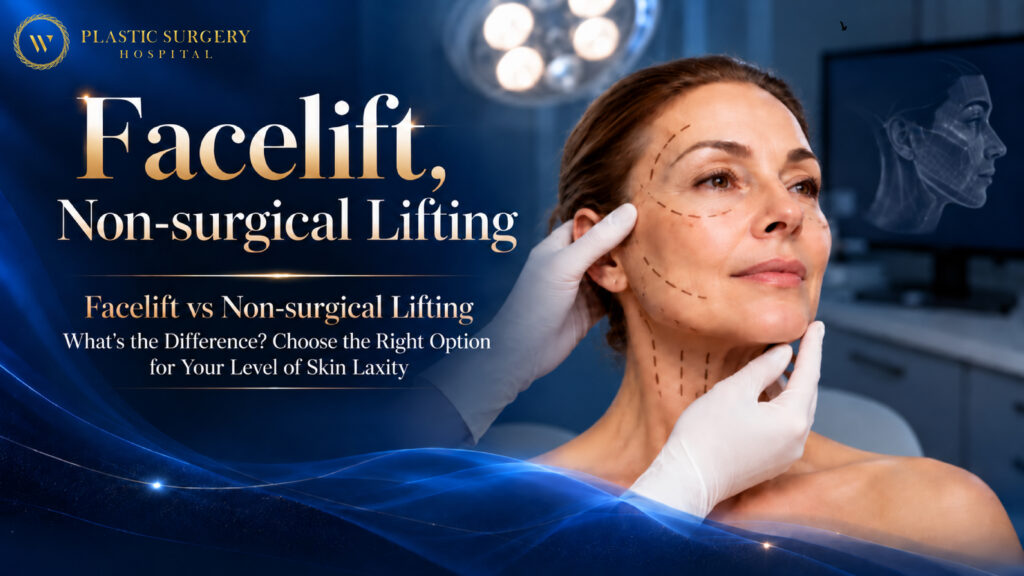
Facelift vs. Non-Surgical Lifting: What's the Difference, and Which Is Right for Your Level of Sagging?
When you start to notice sagging skin, a less defined jawline, or deepening smile lines, one of the first things many people think about is finding a way to lift and tighten. Today there are plenty of options, fromNon-Surgical Lifting (lifting without surgery, such as lasers, Ulthera, thread lifts, and fillers) all the way to major surgery that works at the structural level, like aFacelift. That leads to a very common question: “How are these two approaches different, and which one is right for my concerns?”
This article walks you through the differences between a facelift and non-surgical lifting, so you can choose the most appropriate and cost-effective approach under the safety standards ofW Plastic Surgery Hospital.
Understanding Non-Surgical Lifting: What Is It?
Non-Surgical Lifting refers to a group of aesthetic procedures and technologies that focus on stimulating collagen, tightening the skin, or restoring volume without a scalpel. There is no surgery involved, and downtime is minimal.
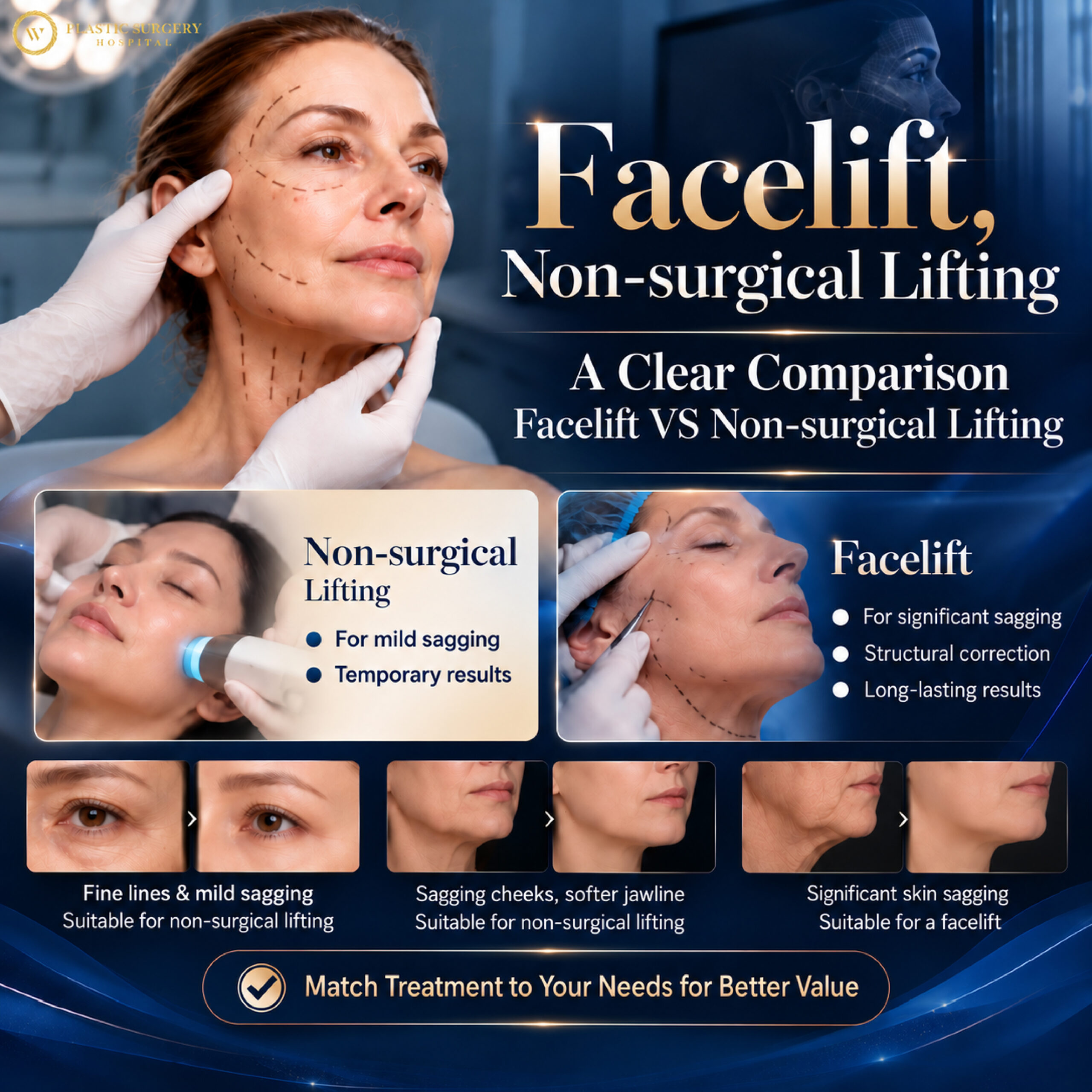
- Energy-based devices (Ulthera / Thermage): Use ultrasound or radiofrequency energy delivered deep into the tissue to stimulate contraction of the skin and fascia layers. Best suited for people with early to moderate sagging.
- Thread lifts: Use dissolvable threads to temporarily pull the skin tighter while stimulating collagen around the threads.
- Fillers and collagen stimulators: Such as dermal fillers or bio-stimulators, which help support the skin’s structure and restore fullness.
Pros: Minimal discomfort, no scarring, and little downtime.
Limitations: Results are temporary (lasting roughly 6 months to 1.5 years, depending on the procedure), and they can’t correct severe sagging.
Understanding the Facelift: The Ultimate Surgical Lift
Facelift (facelift surgery) is a surgical procedure that corrects sagging at the deep structural level. The surgeon releases and lifts the fascia, the muscle layer (SMAS), and the facial retaining ligaments, returning them to a more youthful position.
- Pros: Delivers the most noticeable results and corrects the root cause of sagging with results that last for many years. It is the most effective way to address jowls and a poorly defined jawline.
- Limitations: It is major surgery that requires general anesthesia and an experienced surgeon, and there is an initial recovery period (about 1–3 months for the tissues to fully settle).
Which Option Is Right for Your Level of Sagging?
Choosing the right approach depends mainly on“how severe the sagging is.”
Mild to Moderate Sagging (Ages 30–40)
If you’re starting to see mild sagging and your jawline is beginning to lose its firmness,Non-Surgical Lifting (such as Ulthera or skin treatments) is an effective and sufficient option.
Moderate to Significant Sagging (Ages 45 and Up)
If you have noticeable jowls, very deep smile lines, or you’ve had lasers or thread lifts many times and feel they’re “no longer keeping up,” aFacelift is the most worthwhile and targeted solution because it truly corrects the problem at the underlying structure.
Confidence in Safety and the Highest Standards at W Plastic Surgery Hospital
Whichever lifting approach you choose, the most important thing is being cared for by experienced doctors in a facility that meets proper standards. AtW Plastic Surgery Hospital, we’re here to give you peace of mind:
- An honest assessment of your concerns: Our specialist surgeons carefully analyze your skin structure and level of sagging to recommend the most suitable approach, never selling you more treatments than you need.
- International hospital-level safety standards: Every surgery is supported by sterile operating rooms and a full range of life-support equipment (such as vital-sign monitors and Dantrolene for emergencies), with an anesthesiologist closely monitoring you 100% of the time throughout the procedure.
- Continuous care: Enjoy peace of mind throughout your recovery with ourPost-Op Follow-up program, as our team of doctors and nurses closely monitors your progress.
Explore surgical and nonsurgical lifting options with our team.
FAQ: Frequently Asked Questions About Facelifts and Non-Surgical Lifting
Q1: If I’ve had a lot of non-surgical lifting treatments, can I still get a facelift later?
Yes, absolutely. Having had lasers, thread lifts, or fillers in the past does not rule out facelift surgery. On the day of your consultation, just be sure to give your doctor a detailed history of the procedures you’ve had, so your surgeon can accurately assess your tissue before surgery.
Q2: Why do facelift results last longer than those of non-surgical lifting?
Because a facelift directly lifts and tightens the underlying fascia and muscle layer (SMAS) and removes excess tissue. Non-surgical lifting, by contrast, uses energy to stimulate collagen in the upper or middle layers of the skin, which gradually breaks down over time through the body’s natural processes.
Q3: Is facelift surgery as painful and scary as people think?
During surgery, you’ll be under general anesthesia managed by a specialist anesthesiologist at all times, so you won’t feel any pain during the procedure. Afterward, you may experience some tightness, swelling, or bruising as part of the healing process, which can be managed with pain medication and by following your doctor’s aftercare instructions.
Q4: If I’m afraid of surgery but have significant sagging, can I do non-surgical treatments instead?
For people with severe sagging, non-surgical lifting may only tighten things slightly. It can’t truly correct sagging cheeks or a poorly defined jawline. If you push ahead with it anyway, you may not see satisfying results, and it may not be worth the cost. Consulting a doctor to consider a targeted surgical option is the better choice.
Q5: How do I know which option is best for my face right now?
The best way is to see a specialist surgeon at W Plastic Surgery Hospital, who can examine your actual facial structure and level of sagging. Your doctor will honestly explain the pros and limitations of each option, so you can decide on the approach that suits you best.