091-774-6666
 @whospital

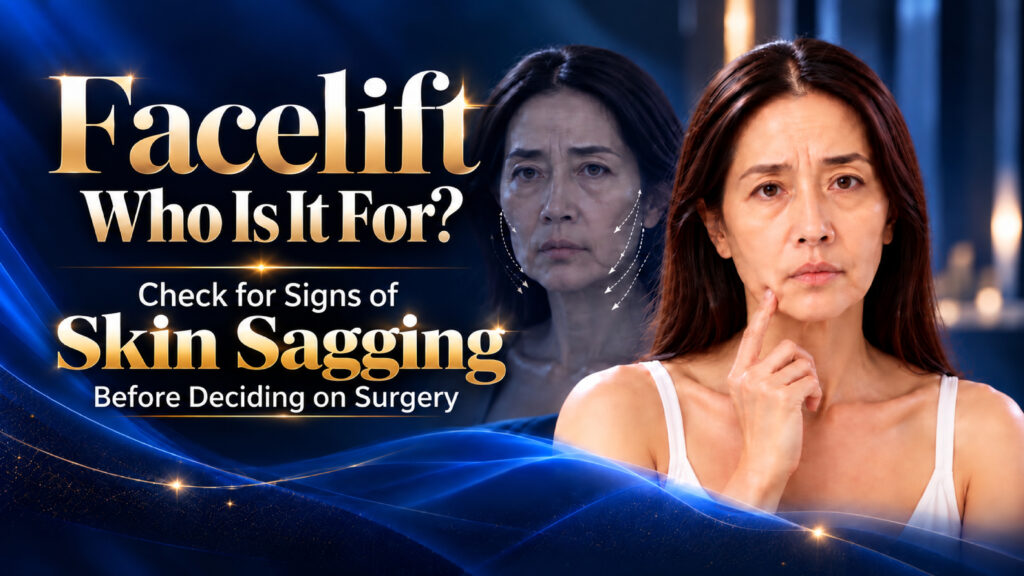
Who Is a Facelift Right For? Check the Signs of Sagging Before Deciding on Surgery
As we get older, sagging on the face usually becomes more and more noticeable, until sometimes moisturizers or light treatments may no longer be enough. That’s when many people start looking for a definitive solution like aFacelift. But the questions that always come to mind are, “Is it time for me to get a facelift?” and “Who is a facelift really right for?”
This article walks you through a detailed check of the signs of facial sagging to help you assess for yourself whether it’s time to decide on lifting surgery, and explains the hospital-level safety standards ofW Plastic Surgery Hospital.
Quick Check! Which Signs of Sagging Suggest You May Be a Good Candidate for a Facelift?
Facial aging doesn’t happen overnight. It gradually sends warning signs as the skin structure and muscles begin to lose their firmness. If you’re starting to notice the following, it indicates that your internal structure is beginning to sag and it may be time to consider a facelift:
1. A Less Defined Jawline and Sagging Cheeks (Jowls)
The once-sharp jawline starts to disappear, with excess tissue or sagging cheeks drooping around the corners of the mouth and along the jaw, making the face look rounder and heavier.
2. Deep Smile Lines and Creases Around the Corners of the Mouth
Deeper smile lines are caused by the skin and tissue of the cheeks sagging and piling up around the corners of the mouth, which can’t be fully corrected with creams.
3. Sagging Neck Skin and a Double Chin
The skin under the chin and on the neck starts to wrinkle, forming visible layers or clearly separated neck muscles (Platysmal Bands).
4. Sagging That Doesn’t Respond to Lasers or Thread Lifts
For people who have already had lifting treatments with energy-based devices or thread lifts but feel that their skin quickly sags again and those treatments are no longer keeping up, facelift surgery is the more targeted solution.
Who Is a Facelift Right For?
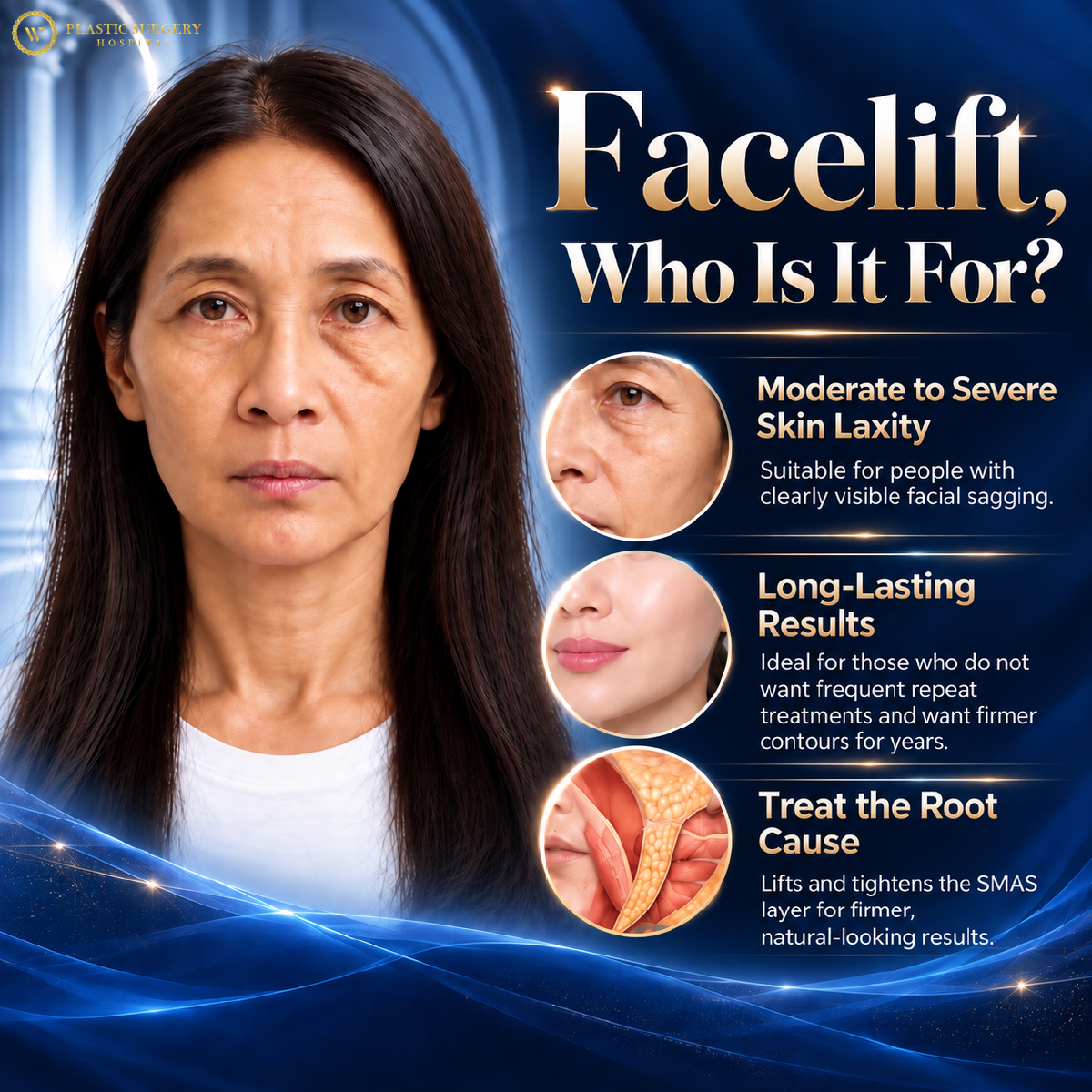
Facelift surgery (Facelift) is no longer out of reach, and it’s not just for older adults. People who are good candidates for this procedure include:
- People with moderate to significant sagging: Best suited for people aged 40–50 and up, or anyone whose facial structure has started to sag noticeably with gravity.
- People who want long-lasting firmness: They are tired of constantly repeating treatments and want lifting results that last for many years.
- People who want to fix the root cause: Want to correct sagging down to the fascia and muscle layer (SMAS), so the face becomes firm again in a natural way that doesn’t look overdone.
Why a Facelift at W Plastic Surgery Hospital Is the No. 1 Choice Among Celebrities
Deciding on a facelift means undergoing major surgery that requires advanced expertise and strict safety measures, which is why celebrities and people in the entertainment industry trust W Plastic Surgery Hospital:
- Deep lifting techniques (SMAS / Deep Plane): Our expert doctors lift the internal structure, making the face firmer without pulling the outer skin too tight, so patients can still smile and show expressions naturally.
- Hospital-level safety standards: Prepared for any situation with international-standard life-support equipment, vital-sign monitors, and essential medications like Dantrolene for emergencies.
- Continuous monitoring by an anesthesiologist throughout surgery: Your anesthesia and vital signs are managed one-on-one throughout the entire surgery for maximum safety.
- 24-hour recovery room care: Close 1-on-1 care from registered nurses in a clean, sterile recovery room, for the smoothest possible recovery.
Considering a facelift? Talk to our team about your options.
FAQ: Frequently Asked Questions About Deciding on a Facelift
Q1: At what age does a facelift start to make sense?
It’s most common among people aged 40–50 and up, since this is when collagen and the fascia structure begin to sag noticeably. However, it also depends on each person’s skin condition and genetics. People who experience sagging earlier can also consult a doctor for an assessment.
Q2: How long do facelift results for smile lines and sagging cheeks last?
A facelift that focuses on lifting the fascia layer (SMAS) is the best way to correct sagging cheeks and deep smile lines. The results rejuvenate the face, making it firm again for many years, and help slow down natural sagging over the long term.
Q3: Does facelift surgery hurt, and how long is the recovery?
With refined surgical techniques and effective pain management, post-operative pain is kept at a manageable level. You may have some swelling and bruising during the first 1–2 weeks as part of the healing process, and these effects will gradually subside, with clearly visible results within 1–3 months.
Q4: I’m worried my face will look too tight and unnatural. How is this avoided?
At W Plastic Surgery Hospital, our surgeons focus on lifting the internal structure (SMAS / Deep Plane) rather than pulling the outer skin tight. This makes the face firmer and more contoured without losing your original features, and you can still smile and show expressions naturally.
Q5: If I’m not sure whether I should get a facelift or another treatment, what should I do?
We recommend coming in for a consultation and a direct facial assessment with a specialist surgeon at W Plastic Surgery Hospital. Your doctor will thoroughly analyze your concerns and recommend the most suitable approach, whether that’s a facelift or another procedure, so you get the most worthwhile and safest results.