091-774-6666
  @whospital
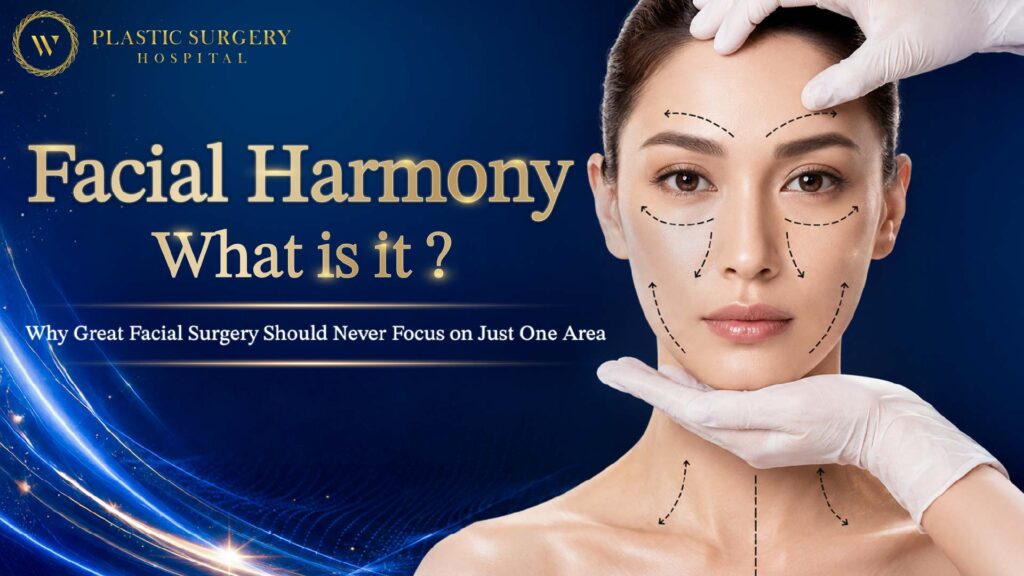
What Is Facial Harmony? Why Good Surgery Should Consider More Than One Area
Have you ever seen someone with a very beautiful nose after augmentation, but when you look at the whole face, everything somehow feels “a little strange,” even though the treated area itself looks good? This is what happens when surgery looks at only one area without considering the overall picture. What is missing is a principle called Facial Harmony, or harmony of the entire face, a concept that W Plastic Surgery Hospital prioritizes in every case.
What Exactly Is Facial Harmony?
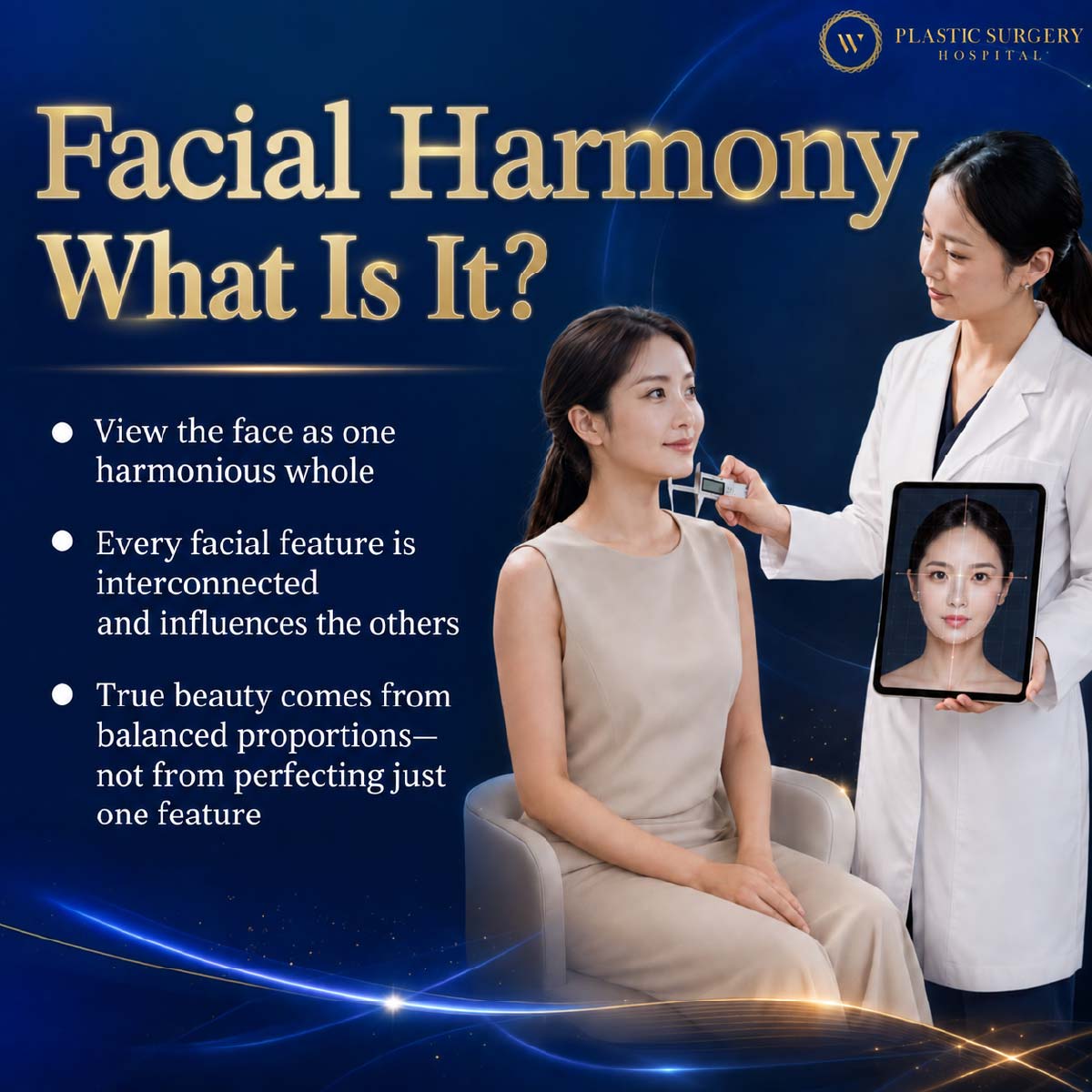
Facial Harmony is the principle of viewing the face as one overall picture rather than looking at individual areas such as the nose, chin, or eyes independently from one another. In reality, every area of the face is connected and affects the others. Therefore, changing one area affects the overall impression of the entire face, not only the area that was corrected.
Simply put, a beautiful face does not come from each individual feature being the most beautiful possible. It comes from proportions among all the facial features that fit together in a balanced way.
Why Good Surgery Should Consider More Than One Area
Correcting one area at a time without considering the overall picture is a major reason surgical results can look forced or lack harmony. Let us look at why this happens.
1. Each Facial Feature Does Not Work in Isolation
A high, well-defined nose may not suit a face with different proportions. Making the nose as high as possible without considering the proportions of the forehead, chin, or lips may cause the nose to stand out from the face instead of blending with the other features.
2. True Beauty Is Measured by “Balance,” Not by “One Feature Standing Out”
Faces that people consider beautiful are usually not faces in which one particular feature stands out especially strongly. They are faces in which all parts fit together naturally. Correcting one area after another without looking at the whole face therefore risks causing the face to lose its balance in the end.
3. Correcting One Area May Unintentionally Create a New Problem
Sometimes making one area more prominent can immediately make a nearby area that previously looked normal appear small or out of proportion. For example, making the chin longer without considering the proportions of the nose and lips may make the face look too long and out of balance.
W Plastic Surgery Hospital Specializes in Facial Harmony Analysis
To design a result that harmonizes with the entire face, our medical team focuses on the following steps in every case.
Assess the entire face before focusing on any one area. Even if the patient comes in wanting to correct only one area, the doctor will always consider the overall proportions first to make sure the result will suit the entire face.
Consider the relationship between each facial feature, such as the proportions between the nose, chin, and lips, in order to design results that support one another instead of conflicting with one another.
Recommend an approach that may differ from what the patient originally expected. If the doctor finds that making the correction exactly as the patient requested may disrupt the overall balance, there will be a discussion and a more suitable alternative may be recommended for the best overall result.
Because True Beauty Is Beauty That “Fits Together” Across the Whole Face
At W Plastic Surgery Hospital, we believe that good surgery is not about making one area as beautiful as possible, but about making every area of the face fit together in balance. Our specialist surgical team therefore uses the principle of Facial Harmony in analyzing and planning every case so that you receive results that are harmonious, natural, and fully preserve who you are.
For more information
FAQ: Frequently Asked Questions
Q1: If I only want to correct one area, is it necessary to consider the entire face too?
Yes, because correcting any one area always affects the overall impression of the face. The doctor will assess all proportions first to make sure that the result in the area you want to correct will harmonize with the other areas.
Q2: Is Facial Harmony the same as beauty according to a universal standard?
No. Facial Harmony is not based on one fixed beauty template. It considers the specific proportions and balance of each person’s face, which can differ from one individual to another.
Q3: If I have already had surgery on several areas and feel my face is not harmonious, can it be corrected?
You can consult a doctor to assess the overall proportions of the face. The doctor will analyze which areas may need further adjustment so that all parts can fit together in a more balanced way.
Q4: How should I prepare to consult a doctor about Facial Harmony?
It is recommended to explain your needs honestly and be open to the doctor’s recommendations about the overall facial proportions, because sometimes the approach the doctor recommends may provide a more harmonious result than what you initially expected.
Q5: Why does the doctor sometimes recommend treating more than one area at the same time?
Because in some cases, correcting only one area may immediately cause a nearby area to look out of proportion. The doctor may therefore recommend considering related areas together so that the overall result is as harmonious as possible. However, the patient still makes the final decision about which areas to treat.