091-774-6666
  @whospital
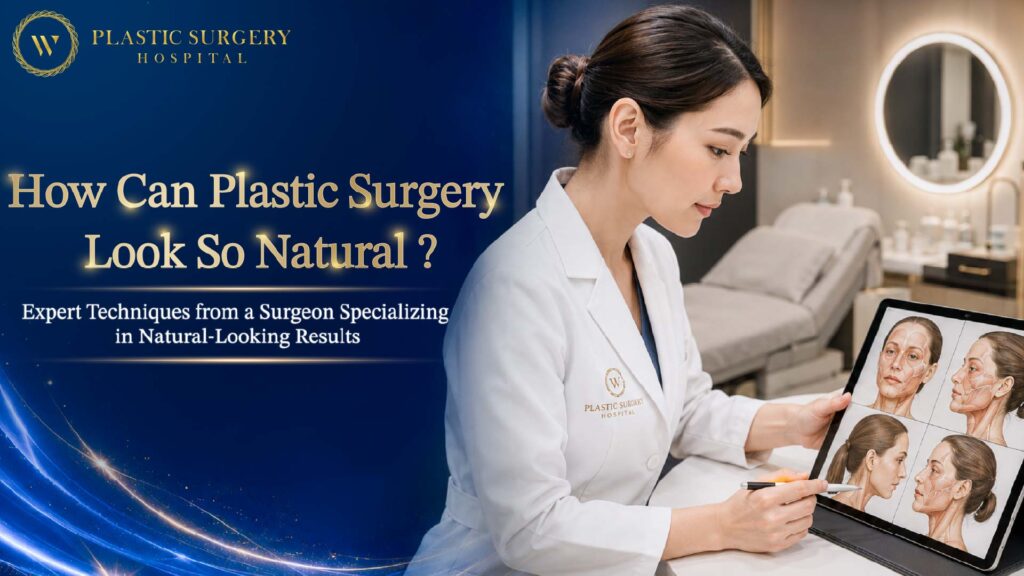
How Can You Have Surgery Without People Being Able to Tell? Sharing Techniques From Doctors Who Specialize in Natural-Looking Results
Many people wonder why some people clearly look better after surgery, yet no one can tell what they had done. The answer does not lie only in the surgical technique, but in the doctor’s “way of thinking” from the very first stage: facial analysis. This article will explain how doctors who specialize in natural-looking results think before operating on each case.
Why Facial Analysis Is More Important Than You May Think
Many people understand the success of surgery as being entirely about surgical skill. In reality, the step that determines whether the result will look natural happens before the scalpel even touches the skin. That step is facial analysis. If the analysis is wrong from the beginning, no matter how good the surgical technique is, the result may still fail to harmonize with the original face.
The Doctor’s Principles for Natural Facial Analysis
To make surgery “hard to detect,” doctors have to use several principles together, as follows:
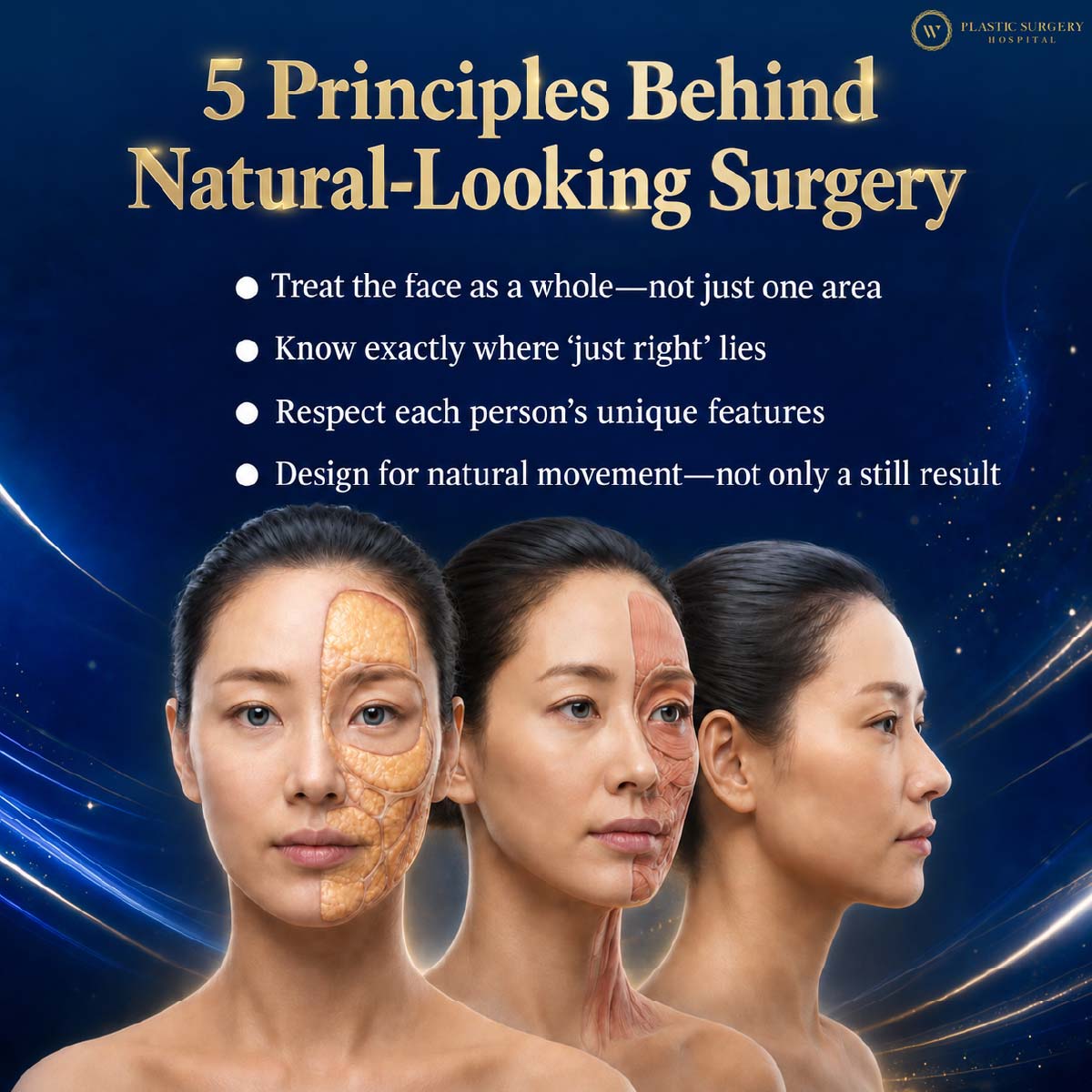
1. Look at the Face as a “Whole,” Not Just One Point
A doctor who understands natural-looking results will not look only at the area the patient wants to correct, such as the nose or chin, but will look at the entire face as a whole. This is because every area of the face is connected and affects the others. Enhancing one area without considering the overall proportions is often what makes the result look forced and easy to notice.
2. Understand the Existing Facial Structure Before Considering Changes
Before planning any procedure, the doctor will study each patient’s bone structure, facial proportions, and skin characteristics in detail, so that the designed result is consistent with the original structure rather than trying to change the face into a form that does not suit it from the beginning.
3. Know Where “Enough” Is — More Is Not Always Better
An important principle for doctors who specialize in natural-looking results is understanding that an amount that is “just right” is more important than the “maximum” amount. Adding more than necessary is often a major reason results look unnatural and are easy to notice.
4. Consider Ethnicity and Individual Characteristics
Asian faces have structures and proportions that differ from the faces of people of other nationalities. A doctor who truly understands natural-looking results will not apply one universal beauty template to everyone, but will design the result to suit the individual characteristics of each patient.
5. Consider How the Result Looks in Motion, Not Just When the Face Is Still
Our faces are not still all the time. A doctor who understands this principle will plan while considering movements such as smiling and speaking, so that the result continues to look natural while the face is expressing emotion, rather than looking good only in photographs.
Facial Analysis for Natural-Looking Results at W Plastic Surgery Hospital
For these principles to be applied in practice, there must be a systematic analysis process, which is something our medical team follows in every case.
Talk to understand the patient’s real needs. This does not mean only listening to what the patient wants to have done, but understanding why they want it, in order to design a result that truly meets the need.
Assess the facial structure in detail, including proportions, bone structure, and skin characteristics, in order to plan procedures specifically suited to each patient.
Explain the expected results directly, so that the patient and doctor share the same understanding of what is possible and what will preserve the patient’s own identity.
Because Good Surgery Is Not Just About Making Someone More Beautiful — It Must “Understand” the Patient’s Face
At W Plastic Surgery Hospital, we believe that surgery that is difficult to detect does not begin in the operating room. It begins from the moment the doctor looks at the patient’s face and starts a detailed analysis. Our specialist surgical team follows this principle in every case so that the results look natural, harmonize with the original face, and fully preserve who you are.
For more information
FAQ: Frequently Asked Questions
Q1: How important is consulting a doctor before surgery?
Very important, because this is the stage when the doctor analyzes the facial structure and plans procedures specifically suited to you. If this stage is done in detail, the resulting outcome is more likely to look natural.
Q2: Why is it obvious that some people have had surgery?
In most cases, it is because too much was added beyond what was necessary, or because the face was not analyzed in detail as a whole before treatment. This causes the treated area not to harmonize with the overall facial proportions.
Q3: How should I tell the doctor that I want a natural-looking result?
You can tell the doctor this directly on the consultation day. The doctor will explain the approach and the expected results so that you and the doctor have the same understanding before planning procedures suited to your facial structure.
Q4: How are considerations for Asian faces different from those for faces of other nationalities?
Asian faces have structures and proportions that differ from Western faces. A doctor who understands natural-looking results will design the outcome to suit each patient’s individual characteristics instead of applying a universal beauty template to everyone.
Q5: How should I prepare before consulting a doctor for facial analysis?
It is recommended to prepare photographs showing your face naturally from different angles and think in advance about which areas you want to correct. You should also be open to the doctor’s recommendations so that the analysis and planning match your real needs as closely as possible.