091-774-6666
  @whospital

Want to Make Your Face Look Younger Without Changing How You Look — Is It Really Possible?
A question many patients often ask before deciding is, “I want to look younger, but I’m afraid my face will change so much that I won’t look like myself. Can it be done?” The answer is yes, it really can, because looking younger does not have to come at the cost of changing the identity of the face. This article will help explain what creates a youthful appearance and how to look younger while still remaining the same person.
What Does a Truly “Youthful Face” Come From? It Is Not Just a Change in Face Shape
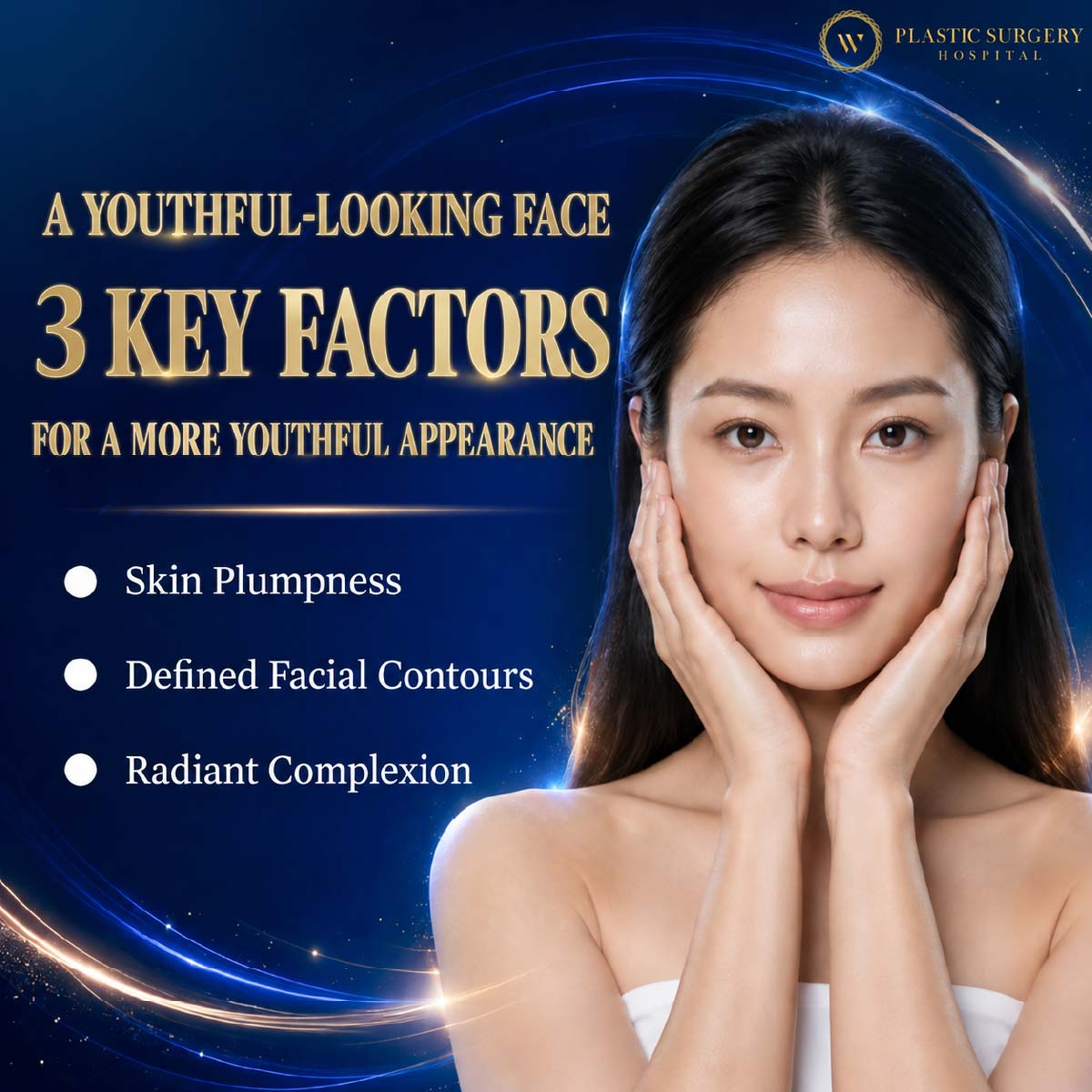
Many people misunderstand looking younger as changing the entire shape of the face. In reality, facial youthfulness comes from much more specific factors, namely:
Fullness of the skin: As we age, subcutaneous fat decreases, making the cheeks look hollow and the face look worn or tired.
Firmness of the facial contours: A sagging facial frame makes the facial outline less clearly defined than when young.
A brighter complexion: Dull or uneven skin can also contribute to the impression of “looking tired” or “looking old.”
It can be seen that youthfulness does not primarily depend on the “shape” of the face, but more on the “condition” of the face. This is why looking younger without changing its original identity is genuinely possible.
How Can You Make the Face Look Younger Without Changing the Original Face?
The key to looking younger without changing its original identity is to “restore,” not to “change the shape.” The main approaches are as follows:
1. Restore Fullness, Not Change the Facial Structure
Adding fat or filler to areas that have lost fullness, such as the nasolabial folds or temples, helps the face look fuller without having to change the bone structure or the original facial shape.
2. Tighten the Facial Contour From the Internal Structure
A facelift that corrects the muscle layer (SMAS) helps the facial contour become clearer again without having to pull the skin until it is overly tight. The result is a firmer face while still preserving the original facial outline.
3. Restore the Skin to Look Brighter
In addition to facial structure, caring for the skin so that it becomes smoother and brighter also plays an important role in the feeling of “looking younger,” because healthy-looking skin naturally makes the face look more youthful.
4. Choose to Treat Only the Areas That Are Necessary
The most important point is not to add or correct more than necessary. The doctor will assess which areas contribute most clearly to visible signs of aging and plan to correct only those areas so that the results blend as naturally as possible with your existing features.
The Difference Between “Making the Face Look Younger” and “Changing to a New Face”
Many people confuse these two concepts, even though they are clearly different.
Changing to a new face: Changing the proportions or shape of facial features so they differ from before, such as changing the shape of the nose or chin into a different form that was not there originally.
Making the face look younger: Restoring what has been lost with age, such as fullness, firmness, and brightness, without changing the original shape or proportions of the face.
Understanding this difference will help you communicate with the doctor more directly and obtain results that actually match what you expect.
W Plastic Surgery Hospital and the Approach to Making the Face Look Younger Without Changing the Original Face
At W Plastic Surgery Hospital, we understand that most patients want to look younger but do not want to lose their own identity. Our specialist medical team therefore places importance on analyzing the true cause of aging in each individual, then planning to correct only those areas in an appropriate amount, so that you have a face that looks brighter and younger while still remaining the same person, in your best version.
For more information
FAQ: Frequently Asked Questions
Q1: What procedures are needed to make the face look younger without changing the original face?
It depends on the cause of age-related changes in each person. It may involve adding fat or filler to restore fullness, a facelift to tighten the facial contour, or skin care. It is recommended to consult a doctor to assess which areas are most suitable for you.
Q2: I’m afraid my face will change too much. How should I tell the doctor?
You can tell the doctor this directly on the consultation day. The doctor will explain the approach and the expected results so that you and the doctor have the same understanding, before planning procedures that focus more on restoration than on changing the shape of the face.
Q3: With this kind of facial rejuvenation, how long do the results last?
How long the results last depends on the procedure chosen and each person’s self-care. For example, a facelift usually lasts longer than filler injections. You should consult a doctor to plan an approach suitable for your goals.
Q4: What age is suitable for this kind of facial rejuvenation?
It is suitable for people who begin to notice signs of aging, such as hollow cheeks, an unclear facial contour, or skin beginning to look dull. These may begin to appear from the 30s onward, although this depends on each person’s skin condition and facial structure. It is recommended to consult a doctor for an individual assessment of suitability.
Q5: Do all areas need to be treated at the same time to see results?
No. You can choose to treat one area at a time according to your needs and readiness. The doctor will help recommend which area is likely to show the clearest result first, so you can gradually make changes in the direction you want.