091-774-6666
 @whospital

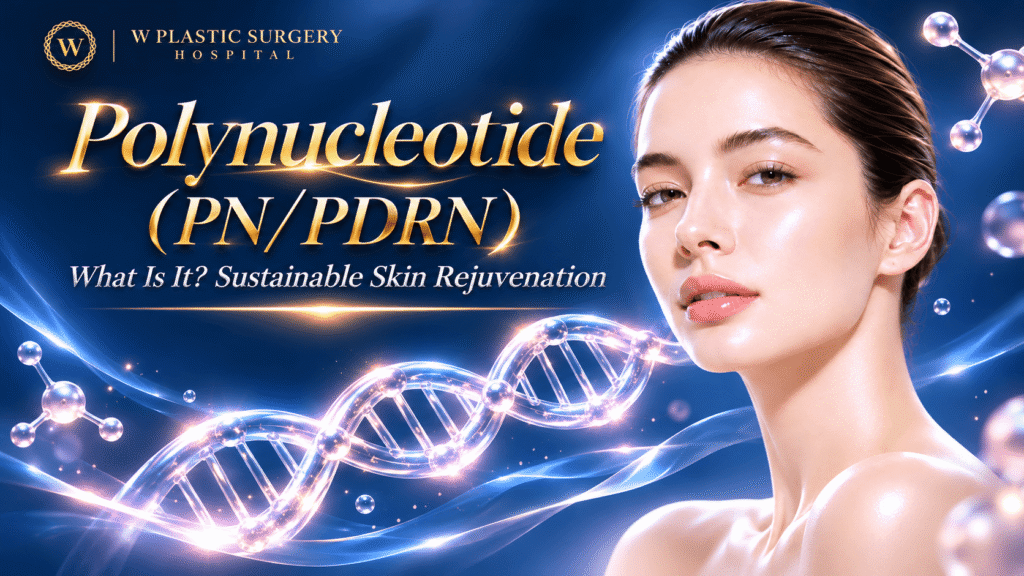
What Is Polynucleotide (PN/PDRN)? An In-Depth Look at the Molecular-Level Skin Matrix Regeneration Innovation for Lasting Youthfulness
When it comes to skin care today, beyond filling deep lines or facelifts to correct sagging, something dermatology and anti-aging medicine consider just as important is restoring skin health at its true foundation, known as“skin Matrix regeneration” (Extracellular Matrix Rejuvenation). One of the most prominent and widely discussed medical innovations inRegenerative Aesthetics is the group of substances calledPolynucleotide (PN) and PDRN
How do these biological extracts work, how are they different, and how do they help restore skin structure at the molecular level? This article takes an in-depth look at the medical science to help you understand what is behind lasting, beautiful, healthy skin
Getting to Know the Skin Matrix: What Is It, and Why Does It Break Down Over Time?
Before getting to know PN and PDRN, we first need to understand that the human dermis (Dermis) is not made up of skin cells alone. It also contains a biological network called theExtracellular Matrix (ECM), or theskin Matrix
The skin Matrix is like the “steel frame and springs” of a mattress. It is made up of the proteins collagen (Collagen) and elastin (Elastin) and the natural moisture-binding substance hyaluronic acid (Hyaluronic Acid), all produced and maintained by fibroblasts (Fibroblast). As we age, UV rays, pollution, and stress damage this skin Matrix network and cause it to break down. Collagen fibers become broken and brittle, and moisture-binding substances decrease, making the skin wrinkled, dry, rough, and less elastic, with deep wrinkles and lines
What Are Polynucleotide (PN) and PDRN? How Are They Different?
BothPN (Polynucleotide) andPDRN (Polydeoxyribonucleotide) are biomolecules in the nucleic acid group (DNA Fragments), usually extracted from salmon sperm (Salmon DNA), which has a genetic structure very close to that of humans and is highly safe. However, they differ in concentration and molecular size depending on their intended use:
- PDRN (Polydeoxyribonucleotide): Short, highly purified DNA strands that are known for stimulating wound healing (Wound Healing), promoting new capillary growth (Angiogenesis), and reducing inflammation in the short term. They are commonly used for fast skin recovery after laser treatments or cosmetic surgery
- PN (Polynucleotide): Long DNA strands with a higher molecular weight (High Molecular Weight) that remain stable in the skin longer. They are known for forming a three-dimensional network (Scaffold) that helps bind moisture, restores the skin Matrix structure, continuously stimulates fibroblast activity, and repairs the DNA of skin cells damaged by UV rays over the long term
How PN/PDRN Work to Regenerate the Skin Matrix at the Molecular Level
Injecting polynucleotides into the skin does more than provide surface hydration. Their biological mechanisms work deep down to the cellular level:
- Fibroblast stimulation (Fibroblast Stimulation): PN signals the fiber-producing cells in the dermis to become active and speeds up the synthesis of new type 1 and type 3 collagen and elastin, so the skin Matrix structure becomes firm and tight again
- DNA repair and antioxidant action (DNA Repair & Antioxidant): PN molecules act as excellent antioxidants, helping protect skin cells from damage and helping repair the DNA strands of aging skin cells so they become strong again
- Restoring blood circulation (Angiogenesis): Stimulates new capillaries, so the blood delivers oxygen and nutrients to the skin more effectively, making the skin radiant, rosy, and healthy-looking again
- Building a natural moisture barrier (Hydration & ECM Support): With its ability to bind water and form a Matrix network like a natural sponge, it helps the skin retain moisture better and reduces dry, rough, dehydrated skin and enlarged pores
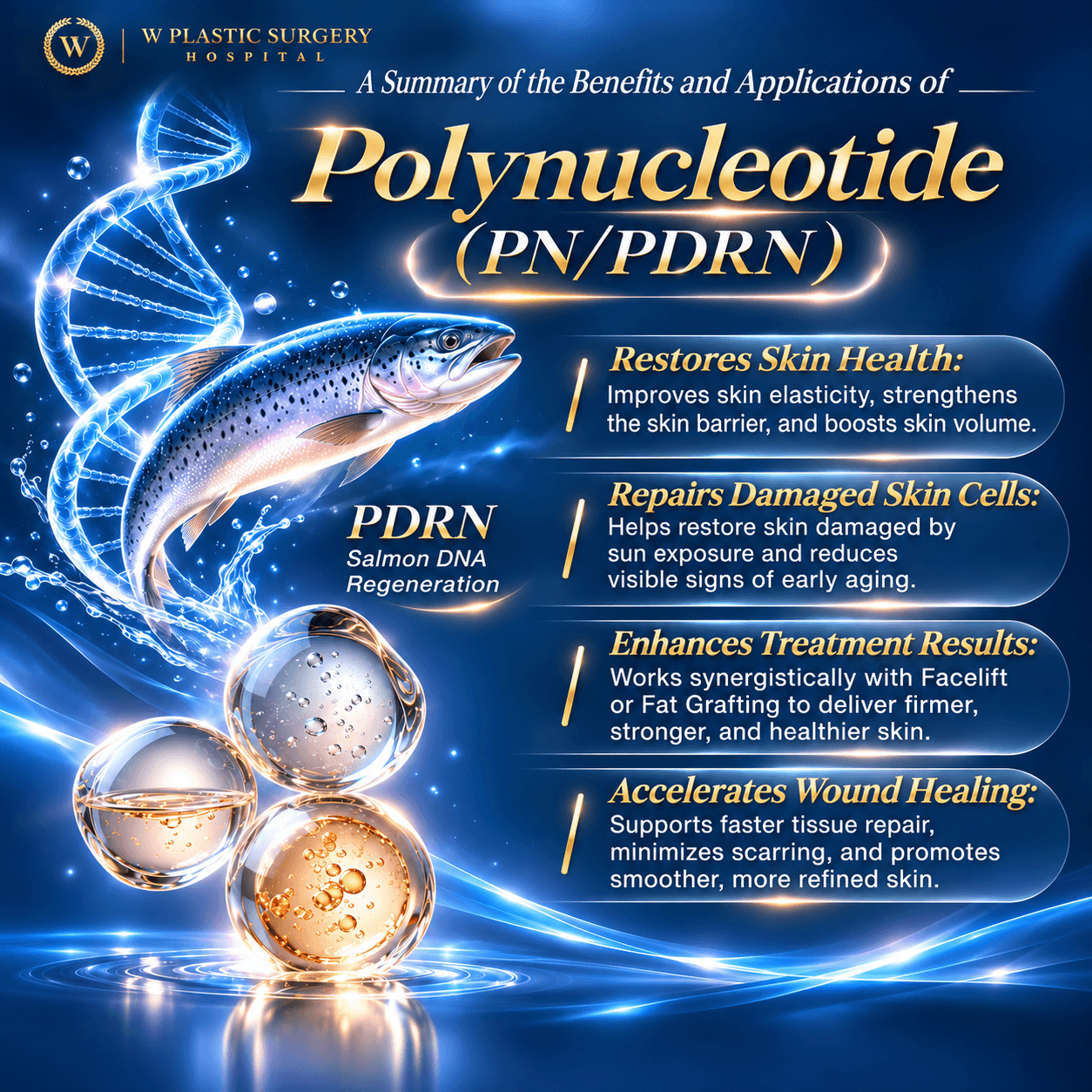
Key Benefits of Skin Rejuvenation with Polynucleotide (PN/PDRN)
Choosing PN or PDRN for skin care delivers results that address aging skin in many dimensions:
- Restores elasticity and firmness: Helps sagging skin become firm and elastic again, like youthful skin
- Restores delicate, sensitive skin: Helps strengthen the skin barrier (Skin Barrier), reduce inflammation, and reduce chronic irritation
- Fades fine lines and tightens pores: Improves skin texture (Skin Texture) so it is smooth and even, with visibly tighter-looking pores
- Restores sun-damaged dull skin: Repairs skin cells damaged by accumulated UV exposure while naturally brightening the skin tone
Integrating PN/PDRN with Modern Plastic Surgery
In premium plastic surgery, Polynucleotide is not only used for individual skin-boosting injections. It is also integrated with major surgery, such as facelift surgery (Facelift) or fat injection (Fat Grafting), to prepare the skin Matrix to be strong and elastic and to help speed up wound healing after surgery, for faster recovery, fading scars, and skin in the treated area that is as smooth and natural as possible
Elevating Beauty and Safety to the Highest Level at W Plastic Surgery Hospital
Procedures that involve injecting biomolecules into the skin must be performed by specialist doctors at a high-standard facility to ensure product quality and patient safety. AtW Plastic Surgery Hospital, we prioritize care at every step under premium hospital standards
- Carefully selected, standardized premium-grade products: We use pure Polynucleotide (PN/PDRN) products that are internationally certified as safe and backed by clear research on their effectiveness
- Personalized assessment and planning: A specialist doctor carefully analyzes your skin Matrix and skin structure to choose the concentration and injection technique best suited to each person’s concerns
- Highest hospital-level safety standards: Every procedure is performed in aninternational-standard sterile room, with a team of specialist anesthesiologists providing close care and emergency life-saving medications such asDantrolene on hand for worry-free safety in every situation
Talk with our team about polynucleotides
Summary
Polynucleotide (PN/PDRN) is an important milestone in modern regenerative medicine, focusing on repairing the skin Matrix and DNA structure at the molecular level rather than offering a temporary, surface-level fix. Choosing treatment at an accredited facility such as W Plastic Surgery Hospital will help you achieve effective, safe, and lasting youthful results
FAQ: Frequently Asked Questions About Polynucleotide (PN/PDRN)
Q1: How do Polynucleotide (PN) and PDRN differ in how they are used?
PDRN consists of short DNA strands that focus on reducing inflammation and speeding wound healing, making it suitable for fast skin recovery. PN consists of longer, more concentrated DNA strands known for building the skin Matrix network, stimulating collagen, and repairing skin structure over the long term
Q2: What facial concerns do PN/PDRN injections treat best?
They help with age-related skin decline, dry, rough, or dehydrated skin, fine wrinkles and shallow lines, and enlarged pores, and help restore delicate, sensitive skin so it becomes stronger, firmer, and naturally smoother
Q3: How long do the results of PN/PDRN injections last?
Results gradually become clearer within 2-4 weeks after treatment as the body produces collagen and repairs itself. Rejuvenation results generally last for several months, and a course of treatments can be repeated as recommended by the doctor to keep the skin looking youthful
Q4: Do PN injections hurt, and how long is the recovery?
The injections use micro-needling or superficial injections across the face. The doctor applies numbing cream beforehand, so it feels comfortable with very little pain. Afterward, there may be small bumps from the product or slight needle marks, which flatten and disappear on their own within 1-2 days with no downtime
Q5: Who is a good candidate for skin rejuvenation with Polynucleotide?
It is suitable for people who are starting to show signs of aging, with skin losing elasticity, wrinkles, or enlarged pores, or people with dry, damaged, delicate, or sensitive skin who want to deeply restore skin health from within
Q6: Why choose W Plastic Surgery Hospital?
Because we provide care under premium cosmetic surgery hospital standards, with treatments performed by specialist doctors, international-standard sterile rooms, close 1:1 anesthesiologist care, and emergency life-saving medications such as Dantrolene fully on hand for maximum safety at every step