091-774-6666
 @whospital

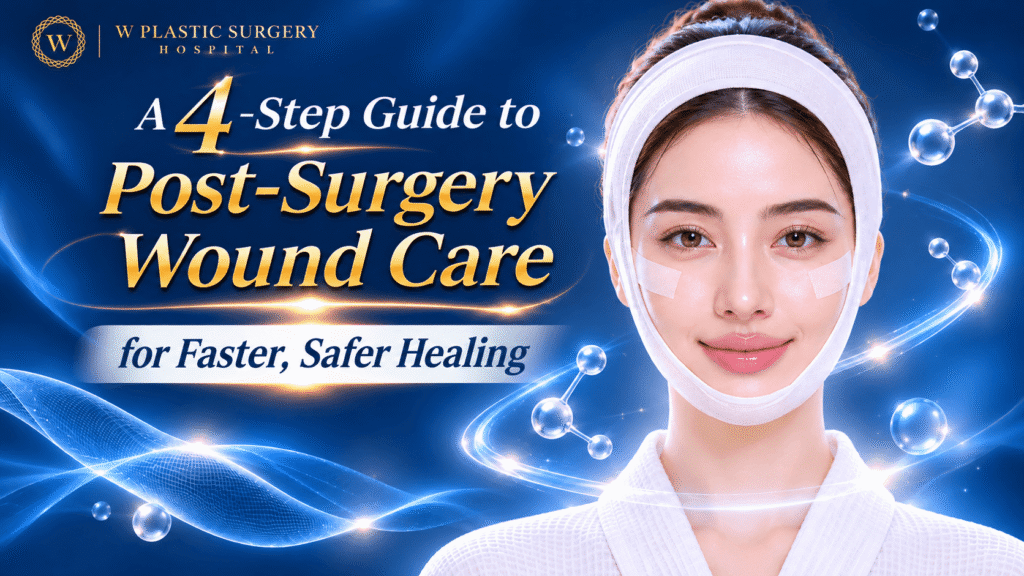
4 Stages of Skin Recovery and Self-Care Tips for Fast, Seamless Healing After Cosmetic Surgery
When you decide to have cosmetic surgery, whether facelift surgery (Facelift), rhinoplasty, breast surgery, or liposuction for body contouring, what comes along with the change in shape is “the wound healing process” (Wound Healing Process). This is a remarkable natural biological mechanism that is extremely important for long-term aesthetic results. Many people may think scars after surgery are a matter of luck or depend only on their skin type, but in reality, the science behind wound healing involves complex stages, and proper care at the right time can make a remarkable difference, turning a noticeable scar into a faint, smooth one
This article takes an in-depth look at the science of wound healing after cosmetic surgery: how the body repairs itself, what factors affect healing, and how to take care of yourself so your wound heals quickly, smoothly, and without worry under medical standards
Understanding the Nature of Cosmetic Surgery Incisions (Surgical Incision)
Medically, cosmetic surgery is a controlled injury (Controlled Injury). Specialist plastic surgeons use very sharp instruments and design incisions along the skin’s natural tension lines (Relaxed Skin Tension Lines) or hide them in the most discreet places (such as the hairline or natural creases) to reduce tension and conceal scars as much as possible
As soon as surgery is over and the incision is closed, the body immediately begins repairing itself through “the cellular wound healing cycle,” which consists of 4 main stages that are continuous and highly complex
An In-Depth Look at the 4 Stages of Wound Healing Science
The human body’s wound healing process is divided into 4 main phases, and each phase involves completely different roles and cells:
1. Hemostasis and Wound Sealing (Hemostasis Phase – Immediately After Surgery to the First Few Hours)
- How it works: As soon as the capillaries at the wound are cut, the body signals platelets (Platelets) to gather at the wound edges to form a blood clot that seals the opening, while releasing chemicals and Growth Factors that call immune cells and other repair cells to the site
- Goal: To stop blood loss and create an initial protective barrier for the wound
2. Inflammation and Cleanup (Inflammatory Phase – Day 1 to Day 4)
- How it works: In this phase, blood vessels around the wound dilate so white blood cells (especially Neutrophils and Macrophages) can remove germs, foreign material, and dead tissue from the wound
- Noticeable symptoms: Swelling, redness, warmth, and a slight feeling of tightness or pain at the wound are a natural process as the body clears the area to prepare for new tissue (not always an infection, as long as the symptoms gradually improve)
3. Tissue and Collagen Building (Proliferative Phase – Day 4 to Week 3)
- How it works: Once the wound is clean, the rebuilding phase begins. Fibroblasts (Fibroblast) move in and work hard to produce collagen (Collagen) and elastin fibers that bind the wound edges firmly together, while new capillaries grow (Angiogenesis) to deliver nutrients and oxygen to the tissue-building cells
- How the wound looks: The wound edges begin to join well, and the new tissue (Granulation Tissue) looks pink or reddish because of its dense capillary supply
4. Remodeling and Collagen Realignment (Remodeling / Maturation Phase – Week 3 to a Year or More)
- How it works: This is the longest phase. The type 3 collagen produced quickly in the previous phase is gradually broken down and replaced with stronger, more durable type 1 collagen. The collagen fibers are realigned parallel to the skin to make the scar more elastic and stronger
- Result: The scar gradually fades from dark red to skin-colored or white, blending smoothly with the surrounding skin (this process can take 6 months to a full year for the scar to fully settle)
Key Factors That Affect the Speed and Quality of Wound Healing
Although the body has natural self-repair mechanisms, several factors can speed up or slow down this process:
- Smoking and nicotine: Nicotine severely constricts blood vessels and reduces the oxygen supply to the wound, slowing healing and increasing the risk of tissue death (Tissue Necrosis)
- Nutrition and protein: Protein, vitamin C, zinc (Zinc), and clean drinking water play a vital role as the main building blocks for collagen and immunity
- Underlying conditions and blood sugar control: Patients with diabetes or conditions affecting blood circulation often heal more slowly than others
- Suturing technique and wound tension: Careful suturing by a skilled surgeon without pulling on the skin helps reduce inflammation and keeps scars as small and smooth as possible
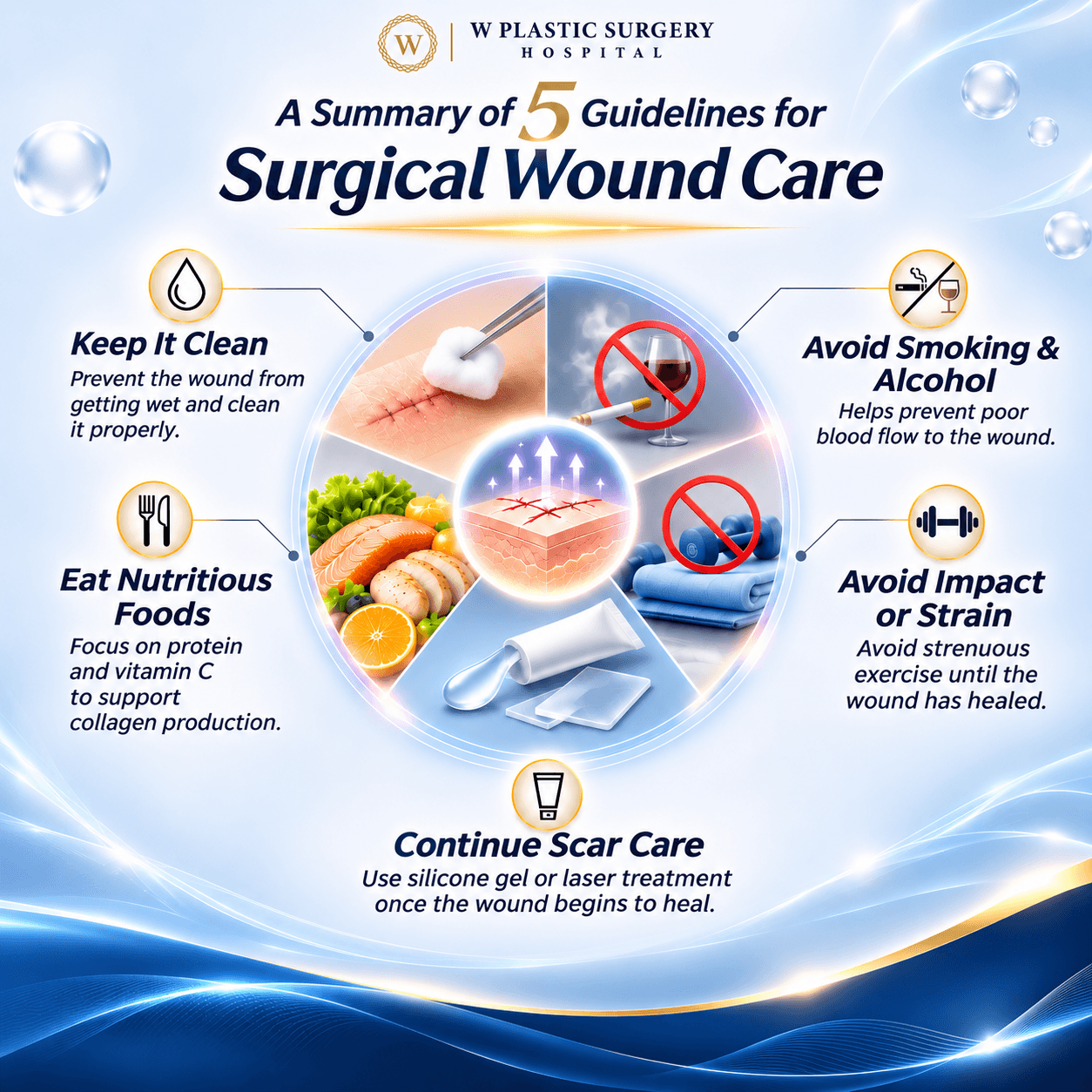
Self-Care Tips to Help Cosmetic Surgery Wounds Heal Faster and Reduce Scarring
Strictly following your doctor’s instructions during recovery is the key to perfect results:
- Keep the wound clean and dry: Avoid getting the wound wet in the early period as instructed by your doctor, and clean it properly with sterile supplies
- Strictly avoid smoking and alcohol: For at least 2-4 weeks before and after surgery, to prevent poor blood supply to the wound
- Eat nutritious food: Focus on high-quality protein and fruits and vegetables high in vitamin C to help stimulate collagen production, and drink enough water
- Avoid activities that strain or jolt the wound: Avoid strenuous exercise or moving the operated area until the wound has joined well
- Ongoing scar care: Once the wound is fully closed, using silicone gel sheets (Silicone Gel) on the scar or laser treatment to reduce redness, as recommended by your doctor, helps the scar fade and smooth out faster
Innovations That Support Wound Healing and Skin Recovery in Modern Cosmetic Surgery
Today, premium plastic surgery applies the science of regenerative medicine (Regenerative Medicine) to make wound healing more effective, such as applying or injectingPRP / PRF (Platelet-Rich Plasma / Fibrin) or growth factor extracts at the incision site. This helps shorten inflammation, speed up capillary growth, and help tissue heal noticeably faster
Elevating Safety and Seamless Results at W Plastic Surgery Hospital
Beautiful, flawless, and safe cosmetic surgery results start from the surgeon’s first incision and continue through wound care. AtW Plastic Surgery Hospital, we pay attention to every detail under premium hospital standards:
- Refined surgical and suturing techniques: Performed by highly skilled specialist plastic surgeons who design incision lines and hidden sutures with premium-grade materials to reduce tension and make scars as faint and discreet as possible
- Highest hospital-level safety standards: Every surgery is cleaned and performed in aninternational-standard sterile operating room (Operating Theater), fully preventing the risk of infection
- Close 1:1 anesthesiologist care: Closely managing safety and vital signs during surgery, with emergency life-saving medications such asDantrolene on hand for peace of mind at every step
- Close follow-up care after surgery: Our doctors and nurses provide wound care guidance, assess your progress at each stage, and offer a program to help speed recovery, so you can be confident your wound will heal quickly, settle beautifully, and stay worry-free
Talk with our team about wound healing after surgery
Summary
Wound healing (Wound Healing) after cosmetic surgery is a natural science created by the body. Understanding its stages and taking care of yourself properly helps wounds heal quickly, reduces the risk of raised scars, and restores your confidence fast. Choosing an accredited, expert facility such as W Plastic Surgery Hospital is an important step toward safe and lasting aesthetic results
FAQ: Frequently Asked Questions About Wound Healing After Cosmetic Surgery
Q1: How many days does it usually take before stitches can be removed after cosmetic surgery?
The timing of stitch removal depends on the location and area of surgery, generally between 5-14 days (for example, 5-7 days for eye or facial incisions and about 7-14 days for facelifts or other structural surgery), based on the surgeon’s assessment
Q2: How many weeks does it take for swelling, bruising, and tightness around the wound to go away?
Swelling and bruising are most severe in the first 3-5 days after surgery, then noticeably subside within 2 weeks. Tightness or slight numbness around the wound may take several weeks to several months as the nerves fully recover
Q3: Why do some people get flat, faded scars while others get raised scars (Keloid / Hypertrophic Scar)?
Raised scars depend on a combination of factors, including genetics or heredity, wound locations with high tension (such as the heart area, chest, or shoulders), and inflammation or infection during recovery. Consulting a doctor early about silicone gel sheets or scar-reducing injections can help prevent them
Q4: What signs indicate that a cosmetic surgery wound is becoming “infected” and that I should see a doctor right away?
If pain, swelling, redness, or warmth around the wound does not go down after 4-5 days but instead the pain keeps getting worse, pus drains from the wound, there is a foul smell, or you have a high fever, see a doctor right away for proper treatment
Q5: Is it true that eating seafood or eggs causes raised scars?
In modern medicine, seafood and eggs do not cause raised scars at all, as long as the person is not allergic to seafood. What matters for wound healing is “good-quality protein” from meat, eggs, and fish, which effectively helps repair tissue
Q6: Why can you feel confident about the safety of wound care at W Plastic Surgery Hospital?
Because we operate under premium cosmetic surgery hospital standards at every step, from surgery in international-standard sterile rooms and careful suturing by specialist surgeons to close follow-up care afterward, so you can be confident your wound will be cared for safely with the most beautiful results