091-774-6666
 @whospital

What Is Fat Grafting After Weight Loss? Where Is Your Own Fat Used to Restore Volume, and What Results Can You Expect?
Successfully losing weight and achieving a slim figure is a major source of pride for many people. At the same time, however, a problem that often follows closely behind is“a face that looks sunken, with deflated cheeks, hollow temples, or deep, dark under-eyes,” making the face look worn and older than before, even as the body looks its best. This happens because the fat beneath the skin of the face breaks down along with the lost body weight.
One of the most natural and safest ways to correct a sunken face and restore fullness isFat Grafting, or autologous fat injection. This article takes you through a detailed look at what Fat Grafting after weight loss is, which areas of the body the fat is taken from, and how it can transform your face to look fresh again.
What Is Fat Grafting After Weight Loss?
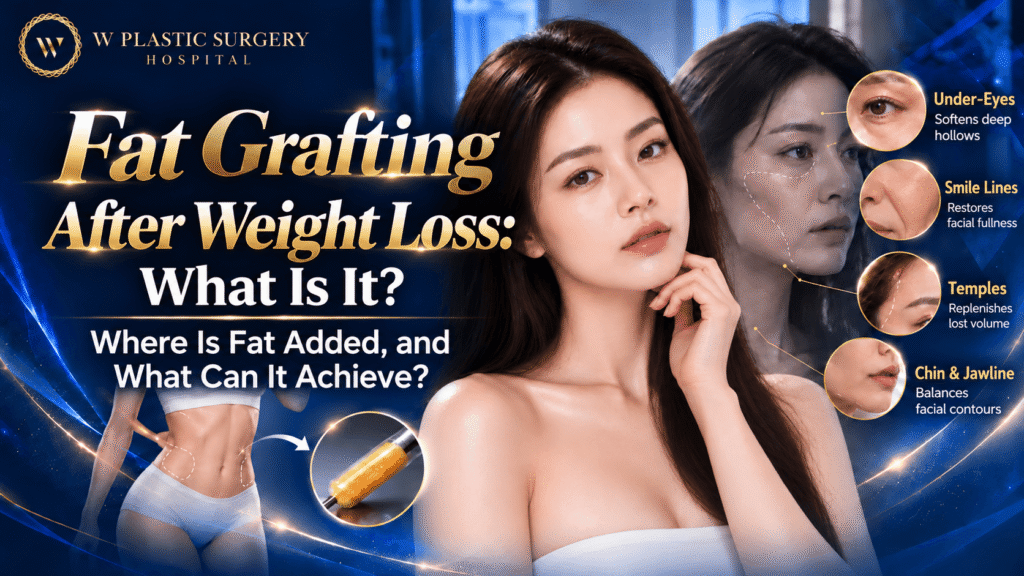
Fat Grafting, or the facial fat transfer technique, takes excess fat cells from another area of your own body (such as the abdomen, outer thighs, or hips) and processes them through filtering, centrifugation, and purification using advanced technology to obtainpure, living fat cells (Micro-fat / Nano-fat). These are then injected back into the skin layers of the face in the areas that have deflated or lost volume from weight loss.
The advantage of using your own fat is that the body will not reject it or react to it, because it is not a foreign synthetic substance. It also corrects a sunken face precisely where needed, while the stem cells present in the fat help rejuvenate the skin for a more radiant appearance.
Which Areas of the Body Is the Fat Taken From to Fill the Face?
The physician selects the liposuction site for Fat Grafting based on each individual’s body shape. The most popular donor sites include:
- The Lower Abdomen: An area with a fairly dense accumulation of fat cells. The fat is soft and relatively resilient to the cell transfer process.
- The Outer or Inner Thighs: This zone often holds stubborn excess fat that is hard to lose, so harvesting it for Fat Grafting helps slim the lower body at the same time.
- The Hips or Flanks: Another source of high-quality fat that physicians frequently select for facial volume restoration.
Which Areas of the Face Should Be Filled After Weight Loss?
When body weight drops, the face experiences Volume Loss, or the loss of fat in key areas, making the facial structure look gaunt. The surgeon injects fat into these main areas:
- Sunken Temples (Temporal Hollow): Deeply sunken temples make the facial structure look harsh and the cheekbones prominent. Fat grafting softens the upper contour of the face.
- Hollow Cheeks and the Area Below the Cheekbones (Sunken Cheeks): Corrects hollow, sunken cheeks, restoring a full, healthy glow so the face looks fresh rather than gaunt and sickly.
- The Eye Sockets and Under-Eye Hollows (Tear Troughs): Fills in the deep, dark hollows around the eyes so they look shallower and the eyes look less tired.
- Nasolabial Folds and Marionette Lines (Nasolabial Folds): Supports the skin that has sagged from the loss of fat, so deep folds look naturally shallower.
What Results Can You Expect from Fat Grafting?
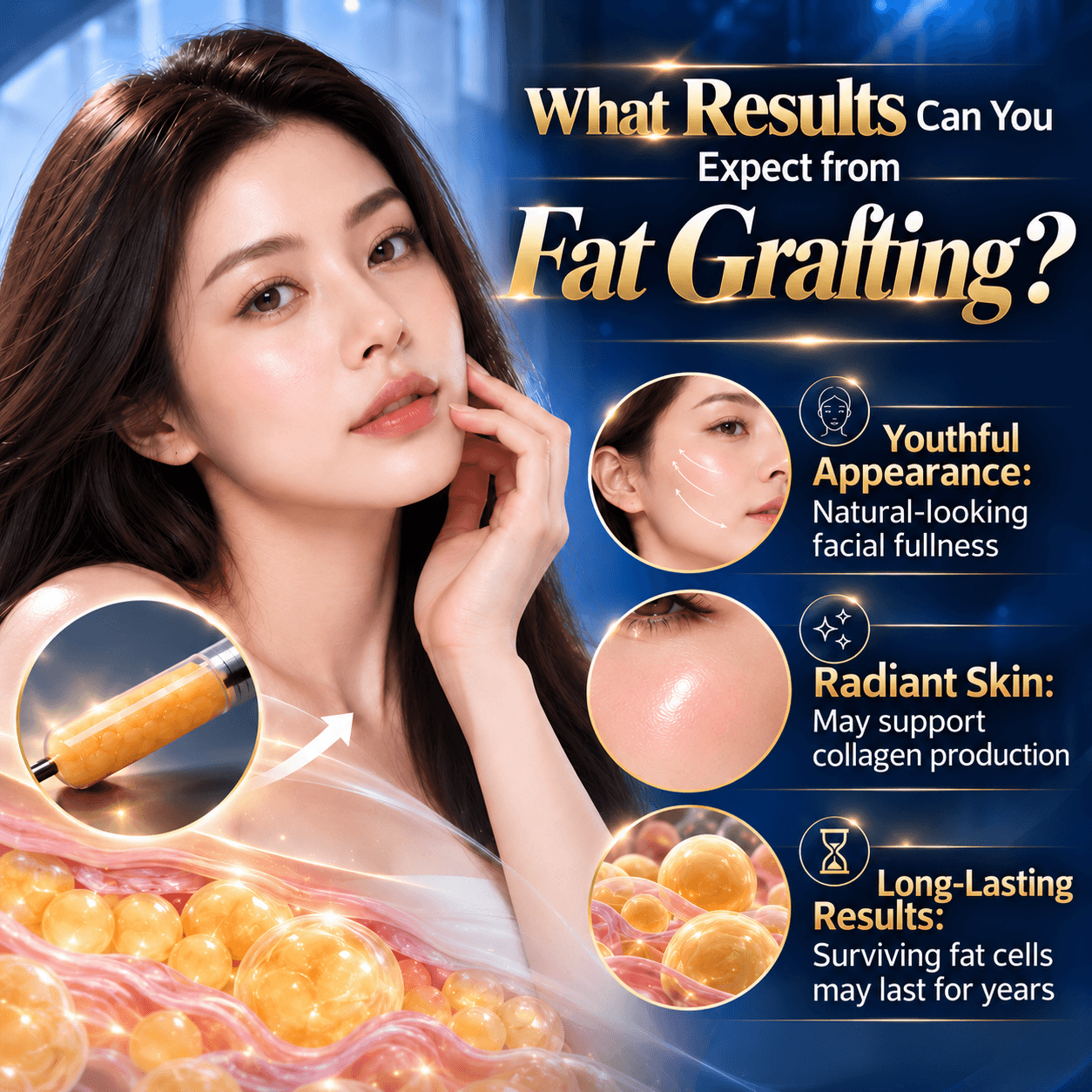
After Fat Grafting, the face not only looks fuller but also benefits the facial structure in the long term in the following ways:
- A Younger, Softer-Looking Face: The restored fullness erases the gaunt, worn look, making the face appear younger and fresher in a natural way, without the stiff, tight look of synthetic fillers.
- More Radiant Skin: The fat extraction process yields Growth Factors and Stem Cells that stimulate collagen production, making the facial skin look smoother and brighter.
- Long-Lasting Results: The fat cells that adapt and develop a blood supply (Fat Survival) remain permanently and become your own tissue, so the results last for many years.
Restore Fullness Safely with the Standards of W Plastic Surgery Hospital
Achieving beautiful, safe, and long-lasting Fat Grafting results does not depend on injection technique alone. It requires the expertise of the surgeon and the standards of the facility. AtW Plastic Surgery Hospital, we give you confidence with premium service:
- High-Quality Fat Extraction Technique: Our fat cell separation process is clean, safe, and gentle on the cells, maximizing the Fat Survival Rate so the fat takes well and lasts long.
- Specialist Physicians Design the Proportions: Our surgeons are experts in facial Anatomy and can precisely assess the amount of fat to add, never overfilling or creating an overdone look, but focusing on softness and balance.
- Hospital-Grade Safety: You can be confident at every step, because procedures are performed in a high-standard sterile operating room, with a dedicated anesthesiology team providing close 1:1 care and emergency life-saving medication such asDantrolene on hand to ensure your maximum safety in any situation.
Talk with our team about fat grafting
Summary
Fat Grafting after weight loss is an excellent solution for those with a sunken face, deflated cheeks, and a worn look from fat loss. Using your own fat to restore volume not only brings back youthful fullness to the face but is also safe and feels natural. Choosing an accredited hospital such as W Plastic Surgery Hospital gives you confidence in both beautiful results and worry-free safety.
FAQ: Frequently Asked Questions About Fat Grafting
Q1: After Fat Grafting, will all the fat be absorbed, and how long does it last?
During the first 1–3 months after the procedure, a portion of the fat cells is naturally absorbed (approximately 30–50%, which is normal). But the remaining fat cells that adapt and develop a blood supply remain permanently and become part of your own facial tissue for life. If your weight stays stable, the results last for many years.
Q2: Does harvesting fat from another area to fill the face hurt?
During the procedure you are under the care of an anesthesiologist, or local anesthesia is used together with sedation, so you feel no pain during the procedure. Afterward, there may be mild soreness or swelling at the liposuction site and on the face, which gradually improves within 1–2 weeks.
Q3: Can I have Fat Grafting together with other surgical procedures at the same time?
Yes. For example, in some cases with both a sunken face and significant skin sagging, the surgeon may recommend a Facelift combined with Fat Grafting in a single session, to correct the facial structure so it is both firm and full all at once.
Q4: How long is the recovery after facial fat grafting?
Recovery time depends on the amount of fat added and your physical condition. Generally, there is swelling and bruising on the face and at the liposuction site for about 5–7 days. After that, the swelling begins to subside, and you can wear makeup, resume your daily life, or return to work within 1–2 weeks.
Q5: Will my face look lumpy or heavier after Fat Grafting?
During the first 1–2 weeks, the face may look slightly fuller or more swollen than usual due to post-procedure swelling. But after about 1 month, the fat cells settle and the swelling subsides to a well-balanced, natural-looking result that is certainly not hard or lumpy.
Q6: What makes Fat Grafting at W Plastic Surgery Hospital different from elsewhere?
Because we operate in a hospital-level facility, with internationally accredited sterile operating rooms, a dedicated anesthesiology team closely overseeing safety, and surgeons highly skilled in facial design, you can be confident in both soft, beautiful results and the highest level of safety.