091-774-6666
 @whospital

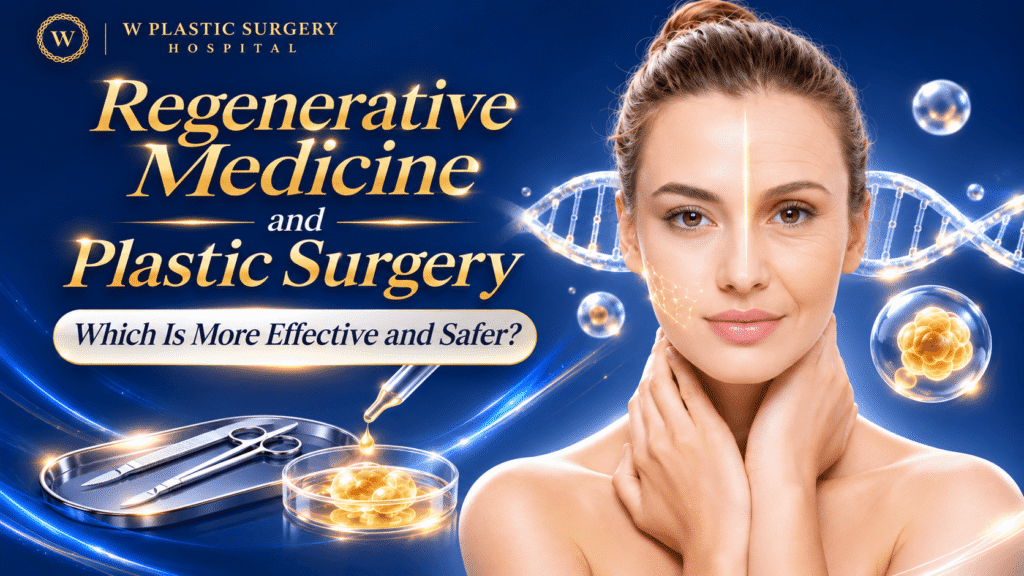
Regenerative Medicine and Plastic Surgery: Which Innovations Really Work and Are the Safest?
As the medical and beauty fields advance rapidly, the termRegenerative Medicine has become a mainstream trend that is widely discussed, whether it involves combining stem cells, growth factors, or biological stimulators with plastic surgery in the hope of slowing aging, restoring skin quality, and helping surgical wounds heal faster
However, from the perspective of medical science and surgery, enthusiasm for new technologies must go hand in hand with evidence-based analysis. This article takes an in-depth look at which Regenerative Medicine technologies in plastic surgery already have strong medical evidence, and which trends still need further long-term study, so you can choose treatment as safely and wisely as possible
Understanding the Connection Between Regenerative Medicine and Plastic Surgery
Plastic surgery (Plastic Surgery) originally focused on correcting shape and structure, removing excess tissue, or filling areas that have hollowed with age, such as facelift surgery (Facelift) or adding fullness. Today, however, the goal has expanded to restoring the health of cells and tissue at a deep level (Cellular & Tissue Regeneration)
Integrating Regenerative Medicine with plastic surgery is therefore not just about changing outward shape, but about improving tissue quality so it regains elasticity, has a better blood supply, and can repair itself as it did in youth. However, with such a wide variety of technologies, distinguishing between“proven innovations” and“innovations still in development” is of the utmost importance for consumers
Which Technologies Have Clear Medical Evidence?
Today, certain procedures and technologies in regenerative medicine have gone through clinical research (Clinical Trials), have long been used in practice, and are internationally recognized as having clear results and safety, including:
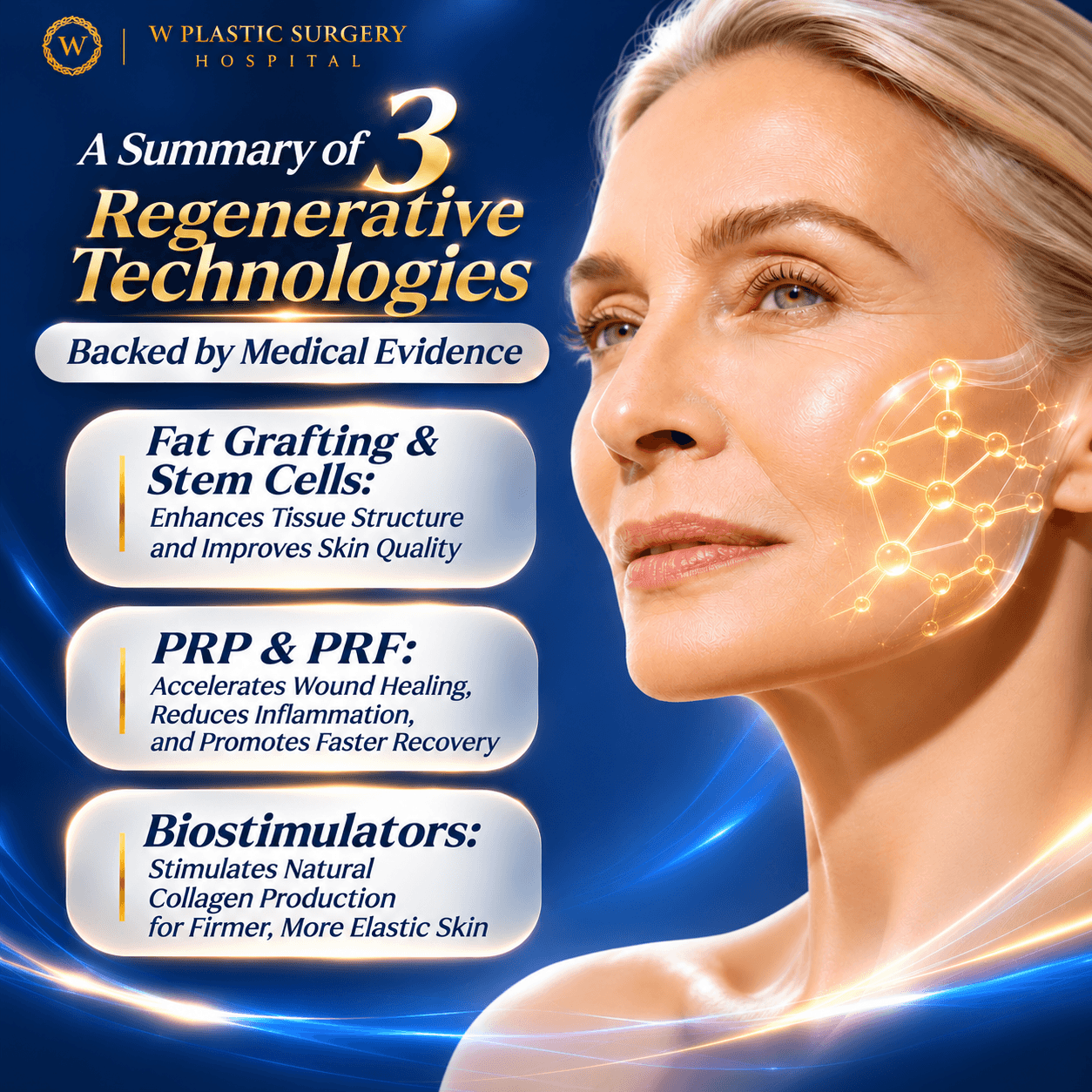
1. Fat Transfer (Autologous Fat Grafting) and Fat-Derived Stem Cells
- Supporting evidence: Transferring fat cells along with specialized stem cells (Adipose-Derived Stem Cells: ASCs) is backed by a large body of research, both for adding volume and for releasing growth factors to rejuvenate the skin
- Proven results: High success rates in filling hollowed facial structures, while also genuinely improving skin quality (Skin Texture) so it becomes thicker and more hydrated at a microscopic level
2. Platelet Concentrates (PRP & PRF) for Wound Healing and Skin Rejuvenation
- Supporting evidence: Platelet-Rich Plasma (PRP) and Platelet-Rich Fibrin (PRF) have long been studied in orthopedic and general surgery for speeding up wound healing (Wound Healing)
- Proven results: When applied in plastic surgery and hair restoration (Hair Restoration), they have been found to shorten inflammation, speed up recovery after surgery, and effectively stimulate collagen production in the upper skin layers
3. Absorbable Biological Collagen Stimulators (Biostimulators)
- Supporting evidence: Substances such as Poly-L-Lactic Acid (PLLA) or Calcium Hydroxylapatite (CaHA) have scientific research confirming how they stimulate fibroblasts to produce collagen naturally
- Proven results: Approved as safe by food and drug authorities (such as the US FDA) for genuinely restoring skin firmness over the long term without leaving permanent foreign substances
Which Areas Still Need More Study and Evidence?
Although newer technologies are interesting and heavily discussed on social media, evidence-based medicine (Evidence-Based Medicine) still requires further large-scale human studies (Larger Randomized Controlled Trials), including
1. Using Exosomes Directly for Anti-Aging Skin Rejuvenation
- Current status: Exosomes are tiny vesicles released by cells and filled with biological signaling molecules. Although laboratory (In-vitro) and animal studies show remarkable anti-inflammatory and cell-regenerating results, long-term human clinical data is still in its early stages
- Issues awaiting research confirmation: Extraction standards, purity, appropriate dosage (Standardized Dosage), and the long-term safety of injecting them into the skin
2. Using Pure Cultured Stem Cells (Pure Cultured Stem Cells)
- Current status: Culturing and multiplying stem cells in a laboratory to inject back into the face or skin is still limited by medical regulations and international safety standards in many countries
- Issues awaiting research confirmation: The risk of cell mutation, controlling abnormal growth, and how stable the cells remain once inside the human body
Integrating Regenerative Medicine with Modern Surgery at W Plastic Surgery Hospital
AtW Plastic Surgery Hospital, we recognize that safety and lasting results must be built on reliable medical evidence (Evidence-Based Practice). That is why we carefully choose regenerative innovations backed by research and combine them with structural surgery for the greatest benefit to our patients:
- Rigorous assessment and selection of technologies: Every regenerative medicine procedure, such as Fat Grafting or the use of recovery-enhancing technologies, is performed under the guidance of specialist surgeons who always keep up with global research
- Highest hospital-level safety standards: Whether it is a minor procedure or major surgery, every step is performed in aninternational-standard sterile room, with a team of specialist anesthesiologists providing close 1:1 care and emergency life-saving medications such asDantrolene on hand for maximum safety in every situation
- Honest consultations: We emphasize giving medically accurate information without exaggerated claims, so patients receive the options best suited to their concerns and safest for their bodies
Talk with our team about regenerative medicine
Summary
Regenerative Medicine is a valuable future for plastic surgery, helping rejuvenation look natural and reach deep to the cellular level. While some technologies, such as fat transfer and PRP, have clear supporting evidence, some innovations are still being studied. Choosing a facility that meets high standards, with specialist doctors who screen for safe, approved technologies, will help you enhance your looks with confidence and lasting results
FAQ: Frequently Asked Questions About Regenerative Medicine
Q1: How is Regenerative Medicine different from plastic surgery?
Plastic surgery focuses on adjusting structure, correcting shape, or directly removing excess tissue, while Regenerative Medicine focuses on stimulating biological mechanisms and repairing cells from within. When combined, they help surgical results look natural and recovery happen faster
Q2: Is fat injection (Fat Grafting) considered part of Regenerative Medicine?
It is considered one of the main procedures with clear supporting evidence, because besides adding volume, fat cells also contain stem cells (ASCs) that effectively help restore skin quality and capillaries in the injected area
Q3: Are Exosomes currently safe, and should I get them?
Exosomes are biological substances that show promise in reducing inflammation and rejuvenating the skin, but long-term medical evidence is still being studied. You should only choose a facility that uses standardized products under the care of specialist doctors
Q4: What can PRP or PRF help with in plastic surgery?
They help stimulate collagen production, fade fine wrinkles, and brighten the skin, and they are commonly used along with surgery to help speed up wound healing and reduce swelling and bruising after cosmetic surgery
Q5: Why is choosing the right facility so important if I’m interested in these regenerative innovations?
Because Regenerative Medicine innovations involve the body’s biomolecules and cells, they must be performed in a hospital-level facility with high sterility standards and by specialist doctors, to prevent infection and control quality for real results
Q6: Why choose W Plastic Surgery Hospital for surgery and regenerative medicine?
Because we provide care under premium cosmetic surgery hospital standards, are committed to evidence-based medicine, have treatments performed by specialist plastic surgeons, provide 1:1 anesthesiologist safety care, and keep emergency life-saving medications such as Dantrolene fully on hand