091-774-6666
 @whospital

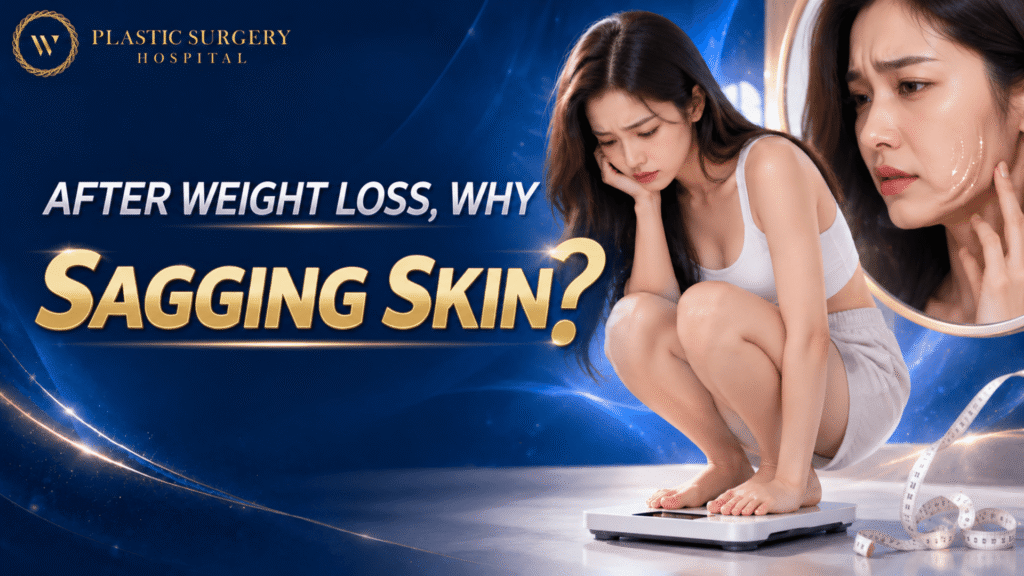
You’ve Lost Weight and Fat, So Why Is Your Skin Still Sagging? Why Do the Skin and the Facial Structure Need to Be Treated Together?
Successfully losing weight and achieving a slim figure is cause for celebration, but many people encounter a major frustration when they look in the mirror and find that the face still looks saggy, the cheeks droop, or signs of aging remain, even though body weight and body fat have dropped considerably. This raises the question: why hasn’t the skin tightened up the way the body has?
The matter is more complex than simply lowering the number on the scale, because sagging after weight loss does not affect the outer skin alone. It extends to the internal structures that have lost their supporting foundation. This article takes you deep into the true causes and explains why we need to care for and restore both the outer skin and the facial structure at the same time.
You’ve Lost Weight and Fat, So Why Is Your Skin Still Sagging?
When we diet or exercise until we lose weight, the body draws on fat stores throughout the body for energy, including the fat beneath the skin of the face. The rapid disappearance of fat leaves empty space and a loss of the mass that supported the skin, much like a balloon that was once inflated and taut: once the air escapes, the balloon becomes wrinkled and slack.
In addition, human skin has a limited capacity to stretch and recover. With Rapid Weight Loss, the outer skin and its elastin fibers cannot shrink back quickly enough to fit the smaller facial contours, resulting in sagging, drooping cheeks, and an undefined jawline.
Why Do the Skin and the Facial Structure Need to Be Treated Together?
Correcting sagging after weight loss for good, natural-looking results cannot focus on just one element, because the human face is made up of multiple tissue layers that work together:
1. Treating the Outer Skin Alone Is Not Enough to Fix a Structural Problem
Expensive skin creams, treatments, or superficial lasers can nourish the outer skin so it looks more hydrated and radiant, but they cannot fix the deflation of the deep fat compartments or the laxity of the retaining ligaments that lie deeper down. If the inner foundation has collapsed, the outer skin will continue to sag and look aged.
2. The Internal Structure and the Skin Must Work in Harmony
Proper facial restoration is like repairing a house: you reinforce the pillars and internal structure (for example, by restoring volume or lifting the deep muscle layer) while also caring for the firmness of the outer skin, so that skin that once sagged fits snugly against the newly repositioned facial structure.
Approaches to Caring for and Restoring the Facial Structure and Skin
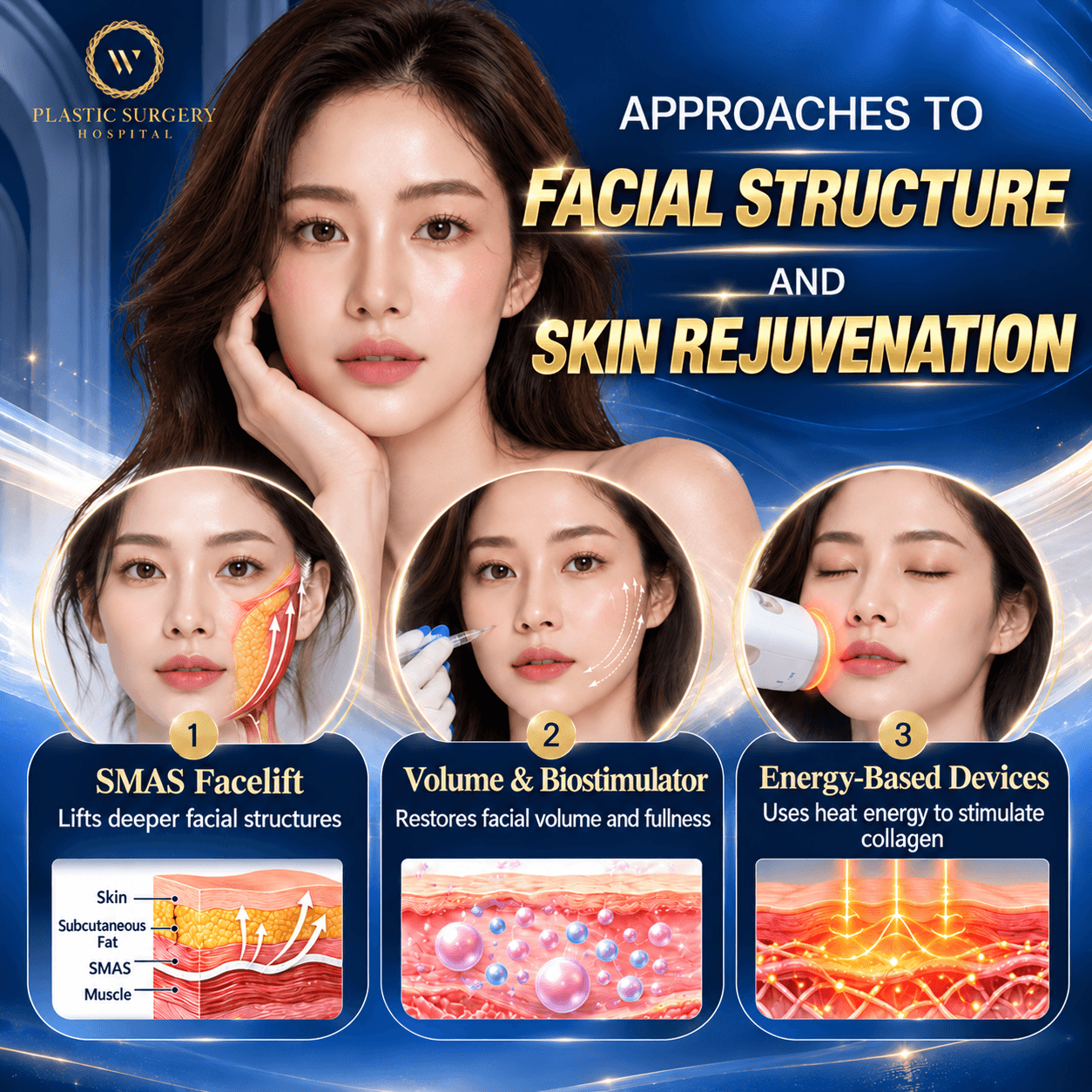
Correcting facial sagging after weight loss with clear, targeted results involves medical approaches that cover both the structure and the skin:
- Deep Structural Lifting (SMAS Facelift): For those with severe sagging, facelift surgery addresses the problem from the muscle layer and internal structure, lifting and tightening the sagging tissue back into place while smoothing away excess skin.
- Volume Restoration and Collagen Stimulation (Volume & Biostimulator): Fills the lost fat compartments with your own fat or collagen-stimulating substances, restoring the supporting base so the outer skin becomes firm and full again.
- Skin Tightening with Heat Energy (Energy-Based Devices): Stimulates the production of collagen and elastin in the dermis to increase the elasticity and firmness of the outer skin.
Restore Firmness with Confidence Through Internationally Accredited Facelift Services at W Plastic Surgery Hospital
For those with significant facial sagging or drooping cheeks, creams may offer very little help. AtW Plastic Surgery Hospital, we are ready to care for you with premium surgical standards.
- Deep-Plane Facelift Technique (SMAS Facelift): Our specialist surgeons lift and tighten down to the SMAS muscle layer, repositioning the tissue where it belongs, with incisions discreetly hidden, for firm, natural-looking results without a tight, stiff, mask-like appearance.
- Hospital-Grade Safety Standards: High-standard sterile operating rooms, with a dedicated anesthesiologist providing 1:1 care throughout the surgery, and essential medications such asDantrolene stocked to handle emergencies.
- Comprehensive Care: Whether it is a facelift, Fat Grafting, or skin structure restoration, our medical team analyzes each case individually for the most harmonious and safest results, the choice trusted by celebrities.
Talk with our team about sagging skin after weight loss
Summary
Sagging skin after weight loss can result from both the loss of fat beneath the skin and the skin’s inability to adapt in time. Treatment must therefore take a comprehensive view, restoring the internal structure and tightening the outer skin together. Let the team of specialist physicians at W Plastic Surgery Hospital care for you, to restore your confidence and a lastingly youthful face.
FAQ: Frequently Asked Questions About Correcting Sagging Skin
Q1: Why doesn’t the skin tighten back on its own naturally after weight loss?
Skin has limited elasticity. If body weight drops too quickly, the elastin and collagen fibers beneath the skin cannot adapt in time, so the excess skin loses its supporting base and eventually sags and droops.
Q2: Can ordinary firming creams fix sagging skin after weight loss?
Skin creams can add moisture and nourish the outer skin, but they cannot fix the deflation of deep fat or the laxity of the internal structure. Significant sagging requires medical procedures or surgery.
Q3: If I have both a sunken face and sagging skin, how should the problem be addressed?
In cases with both fat deflation and sagging skin, the physician may recommend a combined approach, such as deep structural lifting together with volume restoration, so the facial structure becomes full and firm in balanced proportion at the same time.
Q4: How does caring for the facial structure help prevent premature aging after weight loss?
Caring for the structure reinforces the skin’s supporting base so it becomes firm again, preventing deep grooves, drooping cheeks, and wrinkled skin, which are the main reasons the face looks older after weight loss.
Q5: How long should my weight remain stable before deciding on lifting surgery?
It is recommended that you keep your weight steady and stable for at least 3 to 6 months so that the body’s structure and skin have fully settled, which allows the physician to evaluate and plan treatment as accurately as possible.
Q6: How permanent are the results of facelift surgery at W Plastic Surgery Hospital in correcting sagging?
A deep-plane facelift corrects sagging at its root cause, delivering long-lasting results and restoring a defined jawline, so the face looks lastingly younger under the care of our team of specialist physicians.